Hervé Morin
Around 2% of the genome of non-African human populations is Neanderthal in origin, which is the result of more recent interbreeding than had previously been thought.
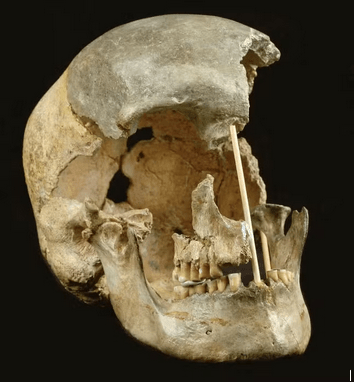
It is rare enough to note that the two most prestigious scientific journals and hereditary rivals, Nature and Science, agreed to publish two paleogenetic studies simultaneously, on Thursday, December 12. Both focus on the origin of some 2% of the genome of today’s non-African human populations, which is drawn from our extinct cousin, the Neanderthal. Both point to a period dating back 45,000 years, a few thousand years before the disappearance of Homo neanderthalensis.
While the two journals decided to coordinate their publications, this was undoubtedly because the first authors of the studies, and many of their colleagues, work at the Max Planck Institute for Evolutionary Anthropology, in Leipzig. This Mecca for ancient DNA research was founded by Svante Pääbö, winner of the 2022 Nobel Prize in Medicine or Physiology. It was he who first made the Neanderthal genome speak, revealing, in 2010 ,that part of our genetic heritage bore the traces of interbreeding with them. Two years later, he attempted to date them, proposing a broad range spanning from 47,000 to 65,000 years ago.
You have 78.7% of this article left to read. The rest is for subscribers only.




 The Tower Post