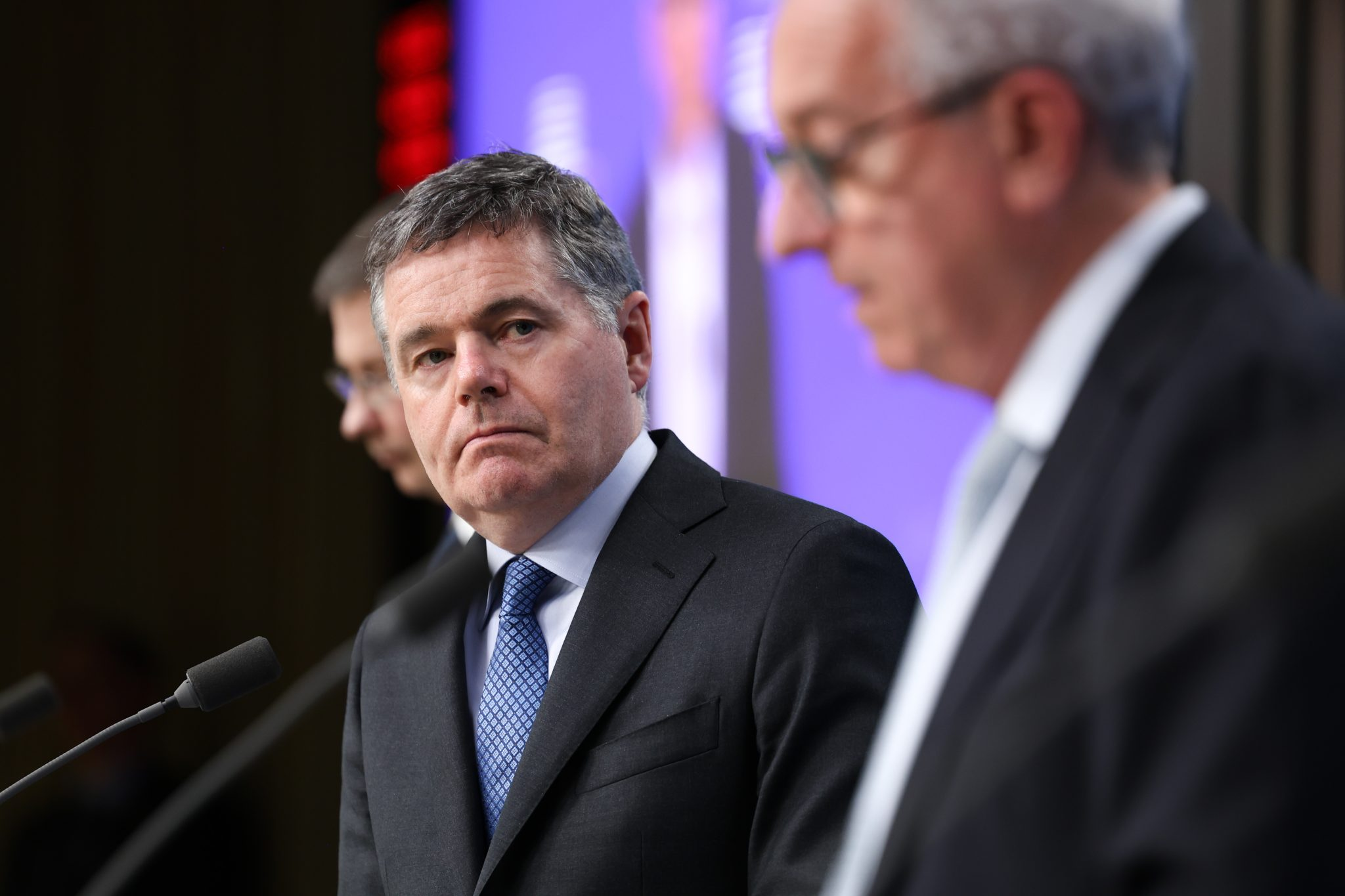
Eurogroup President Paschal Donohoe told reporters that the eurozone’s “overall fiscal stance” this year is still expected to be “slightly contractionary” despite steep increases in defence investments.

By Thomas Moller-Nielsen
Eurozone countries remain committed to cutting net government expenditure despite recent pledges to ramp up defence investments, senior EU officials said on Monday.
Eurogroup President Paschal Donohoe told reporters that the single currency area’s “overall fiscal stance” this year is still expected to be “slightly contractionary,” as previously agreed by eurozone ministers in December.
“Does that [December] statement and that guidance still stand? It does,” said Donohoe, who also serves as Ireland’s finance minister.
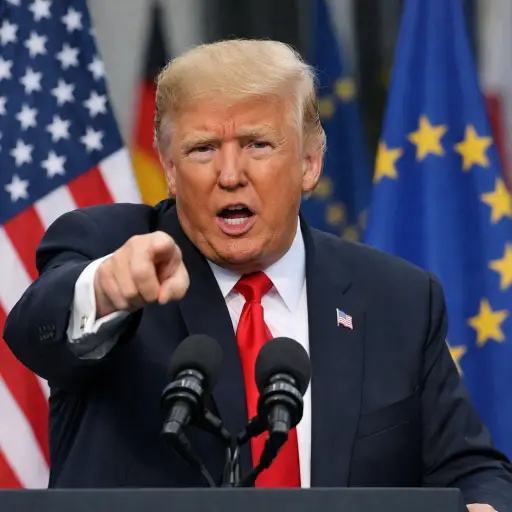
Donohoe added that ministers, nevertheless, acknowledge that “we are in a very, very different world” compared to the one before Donald Trump’s return to the White House in January, which upended decades-long assumptions about Washington’s commitment to European security.
Trump recently withdrew military and intelligence support for Ukraine in its war against Russia and has repeatedly suggested that the US might not defend fellow NATO members if they were attacked.
Speaking alongside Donohoe on Monday, European Commissioner for Economy Valdis Dombrovskis similarly noted that the Eurogroup’s December statement “remains valid”, citing the need to contain inflation, which remains slightly above the European Central Bank’s 2% target.
Dombrovskis and Donohoe have previously clashed over whether new defence investments would require changes to the bloc’s overall fiscal outlook.
At a meeting of eurozone ministers in Brussels last month, Donohoe said December’s statement “remains intact” while Dombrovskis argued that the bloc’s fiscal stance would “certainly” shift “towards more expansion”.
Monday’s comments follow Germany’s announcement last Tuesday of a defence and infrastructure package worth up to €1 trillion.
The bill, which is not yet certain to pass the Bundestag, came just hours after the European Commission proposed a raft of measures—including suspending the bloc’s recently revamped fiscal rules—that Brussels claims could boost defence investments by €800 billion over the next four years.
Last week, Germany’s envoy to the EU also told other member states’ ambassadors that the rules, which threaten EU countries with fines if they run deficits greater than 3% of annual GDP, should be changed rather than merely suspended.
However, Germany’s finance minister, Jörg Kukies, said before Monday’s Eurogroup meeting that Berlin’s view of whether the rules need to be altered will “depend on the exact formulation of what the Commission will propose”.
Dombrovskis, however, suggested that the rules would not be revised in the near future, noting that a revised version of them only came into force last year and that renegotiations “would take time”.
“We are dealing with hard security issues which we need to address,” he said, adding: “We need to react now.”
Source: Euractiv.com