By EUToday Correspondents

The European Parliament has sounded the alarm on Europe’s need to bolster its economic and defence capabilities, with MEPs urging swift and decisive action in the face of growing global challenges.
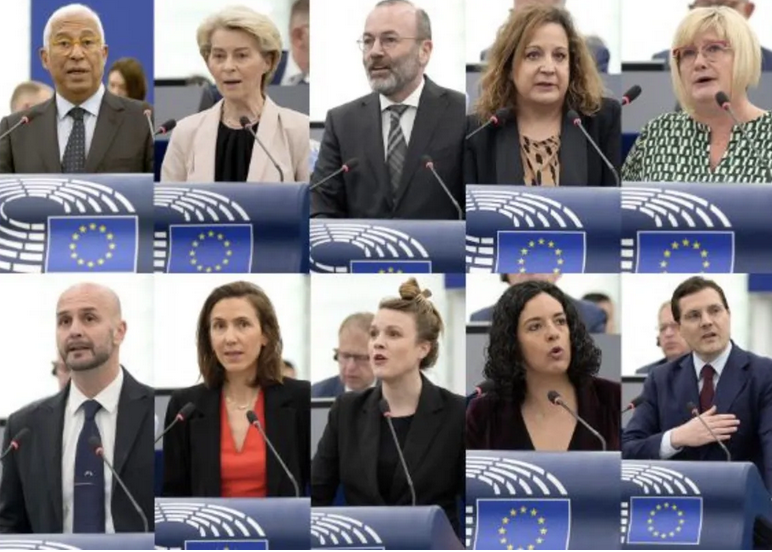
During a heated debate on Tuesday, Members of the European Parliament (MEPs) pressed European Council President António Costa and European Commission President Ursula von der Leyen on the importance of reinforcing the bloc’s competitiveness, enhancing its defence posture, and ensuring strategic autonomy in trade.
Addressing Parliament, Mr Costa underscored the urgency with which EU leaders now view the challenges confronting the continent. The recent European Council summit on 20th March, he said, marked a pivotal moment in the Union’s push towards greater sovereignty and resilience.
“Only a more prosperous economy will provide the necessary resources to invest in our defence,” he declared, urging policymakers to cut red tape and close the gaps in innovation and productivity that are hampering Europe’s growth.
His comments come as geopolitical tensions continue to rise, with ongoing conflicts on Europe’s doorstep underscoring the need for a more robust security framework. Costa stressed that without immediate and sustained investment in defence, the EU risks falling behind in an increasingly unstable world.
Meanwhile, Commission President Ursula von der Leyen laid out the EU’s approach to the tariffs imposed by the United States, making clear that while diplomacy is the preferred course, Brussels is prepared to retaliate if necessary.
“Our objective is a negotiated solution,” she said, but swiftly added, “Europe has a strong plan to retaliate, and we will use it.”
Her remarks reflect the EU’s growing determination to assert its economic independence. As part of a broader strategy to safeguard European industry, von der Leyen committed to diversifying the bloc’s trading relationships and eliminating internal barriers that hinder economic growth. She announced that the Commission will be tabling proposals next month aimed at removing obstacles within the Single Market and preventing new ones from emerging.
The debate also saw MEPs urging the EU to strengthen its strategic autonomy. Many lawmakers backed calls for simplifying market regulations, arguing that reducing administrative burdens would improve Europe’s economic resilience. However, some warned that any reforms should not come at the cost of the EU’s climate commitments under the Green Deal.
On the issue of defence, Ukraine was once again at the forefront of discussions. A significant number of MEPs demanded tougher sanctions against Russia and called for frozen Russian assets to be used in the reconstruction of Ukraine. Others pressed for reinforced security commitments to Kyiv, arguing that Europe’s credibility was at stake in its handling of the war.
At the same time, there were calls for a more balanced approach to global conflicts, with several MEPs cautioning against double standards in EU foreign policy. They stressed that while Ukraine remains a top priority, the Middle East and other regions should not be overlooked.
The debate also highlighted frustrations with Hungary’s stance within the European Council. Some MEPs accused the government of Viktor Orbán of deliberately obstructing key decisions, thereby undermining the EU’s ability to act decisively in times of crisis.
In addition to Hungary’s diplomatic positioning, concerns were raised over democratic backsliding in the country. Several MEPs called for firm measures to uphold fundamental rights and European values, warning that inaction could embolden other governments to follow suit.
Migration policy remains a contentious issue, with MEPs stressing the necessity of a coordinated approach to returning migrants to their countries of origin. They advocated for the establishment of safer and more efficient return pathways, while also calling for stronger partnerships with origin countries to tackle the root causes of migration.
As Europe grapples with multiple crises—from economic stagnation to security threats—the calls for decisive action are growing louder. The coming weeks will be critical as the European Commission unveils its proposals, which will ultimately determine whether the EU can truly rise to the challenges it faces or whether bureaucratic inertia will once again slow progress.
For now, the message from MEPs is clear: Europe must act—and fast.
Source: Eutoday.net