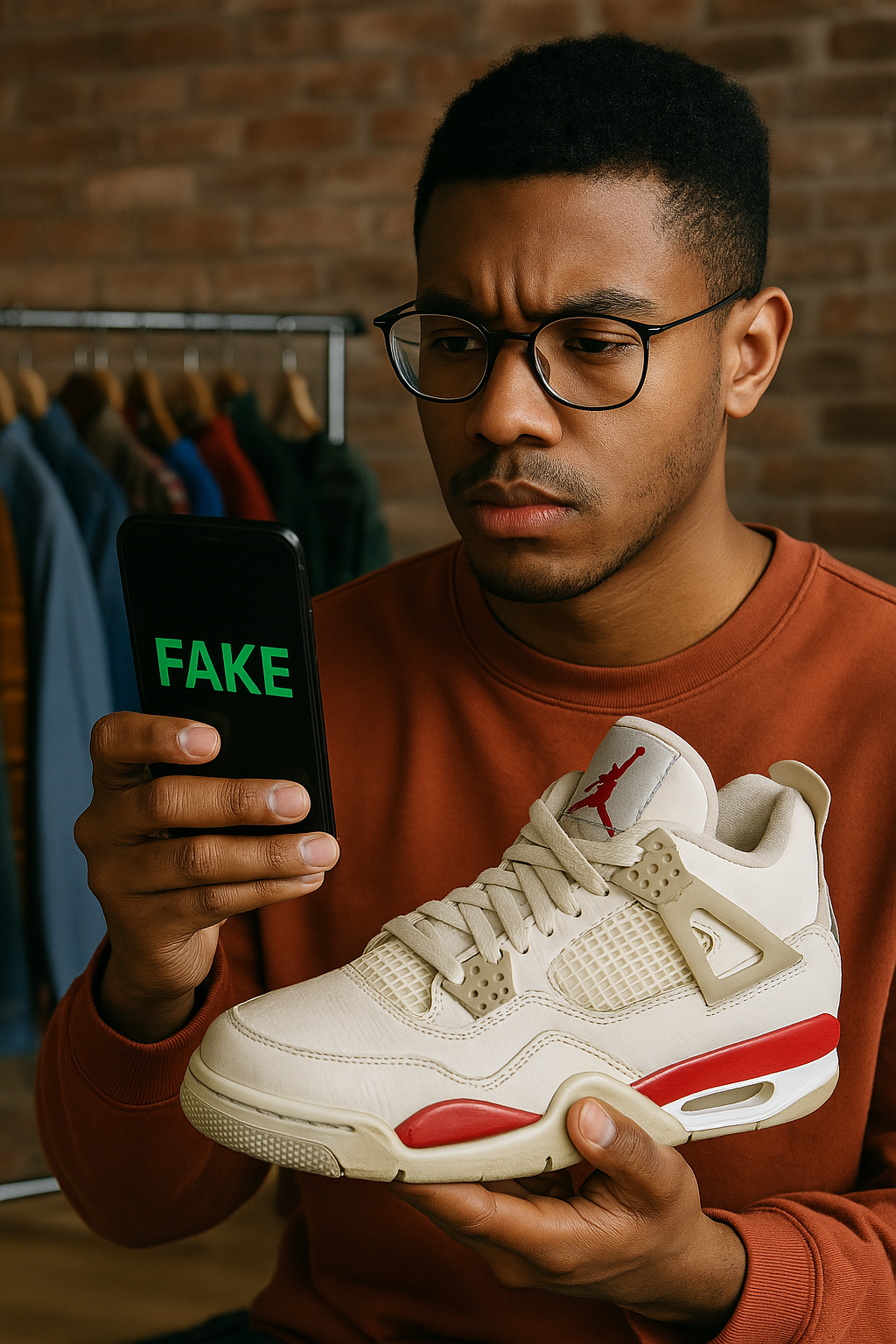
The booming second-hand fashion market is now facing a darker reality

CARDIFF – The booming second-hand fashion market, once hailed as a sustainable and budget-friendly alternative to fast fashion, is now facing a darker reality: a surge in counterfeit designer goods infiltrating online marketplaces and vintage shops.
Fashion influencer Torbian Dennis, 23, from Cardiff, learned this the hard way after purchasing a £150 pair of trainers from a popular resale app. Although assured by the seller that the shoes were genuine, a quick scan through a verification app confirmed his suspicions—they were fake.
“I’ve been caught out multiple times buying Nike trainers online,” Dennis said. While he was able to secure a refund via PayPal, others aren’t so lucky.
The resale fashion market is thriving, projected to hit nearly £300 billion globally by 2029, fueled by shoppers seeking sustainable choices or bargains amid the ongoing cost of living crisis. But this popularity has created a lucrative opportunity for counterfeiters.
Fake designer items—from Louis Vuitton handbags to Stone Island jackets and retro football shirts—are being sold at prices high enough to appear legitimate, misleading unsuspecting buyers. Platforms like Vinted, eBay, Depop, and Facebook Marketplace are now under increasing scrutiny.
Helen Barnham of the UK’s Intellectual Property Office (IPO) says criminal operations are exploiting the trend. “The second-hand market has become really popular, and criminals will use that as an opportunity,” she said. The IPO is investigating how counterfeit goods are entering online supply chains and whether some products pose safety risks.
“There’s a real risk consumers could be ripped off—or worse, harmed—by fake goods marketed as authentic,” Barnham added.
According to Citizens Advice, complaints about counterfeit items sold online have risen 30% in the past year. Selling such goods can carry severe penalties, including unlimited fines and up to 10 years in prison.
Vintage Retailers Sound the Alarm
Jacob Knight, 26, owner of Knight Vintage in Cardiff, says the problem is worsening. “You’ve got to do your research and really master the craft of telling which is which,” he said. “It’s such a big issue now.”
Knight only sources stock from trusted collectors and warns that fake goods hurt not only consumers but legitimate businesses. “Once a customer gets burned, they’re hesitant to buy vintage again. That lack of trust could drive independent stores off the high street.”
Brands most commonly counterfeited include Gucci, Prada, and Louis Vuitton, according to Knight.
The counterfeit issue also extends into the booming market for retro sports kits. Daniel Rees, who runs Cardiff Classic Shirts, says some sellers are listing fake football jerseys at prices meant for genuine collectors.
“If you go to a Wales game, you’ll see hundreds of 1994 shirts—and 95% of those are going to be fake,” said Rees. He uses product codes, stitching details, and tags to authenticate merchandise.
Marketplaces Respond, Critics Demand More
To combat the rise in fakes, platforms like eBay and Vinted have launched authentication services for high-end items. eBay claims it has verified over 10 million luxury goods to date.
Kirsty Keoghan, eBay’s global general manager for fashion, acknowledged the growing challenge. “When things are on trend, fraudsters will follow,” she said. “We work hard behind the scenes to keep counterfeit listings off our site.”
But critics argue that self-policing isn’t enough. The Chartered Trading Standards Institute (CTSI) is calling for stronger regulation and wants online marketplaces held legally responsible for counterfeit and unsafe products sold on their platforms.
“The CTSI has serious concerns about the flood of counterfeit products sold by third parties,” said David MacKenzie, speaking in support of changes to the Product Regulation and Metrology Bill currently in Parliament.
Meta, which owns Facebook Marketplace, said it collaborates with law enforcement and encourages users to take precautions—like checking seller profiles, reviews, and arranging meetings in public.
All platforms have stated they will ban or suspend users caught selling counterfeit goods.
Staying Safe While Shopping Second-Hand
Experts advise buyers to take the following precautions:
Purchase from verified or trusted sellers
Check logos, tags, and trademarks for inconsistencies
Understand refund policies
Use payment methods with buyer protection, like credit cards or PayPal
Be skeptical—if the price seems too good to be true, it probably is
As the resale fashion market continues to grow, so too does the need for vigilance. What was once seen as a safe and stylish way to shop sustainably is now a hunting ground for counterfeiters—and a call to action for consumers and regulators alike.