Escalating Cartel Violence, U.S. Pressure, and a New Government Strategy
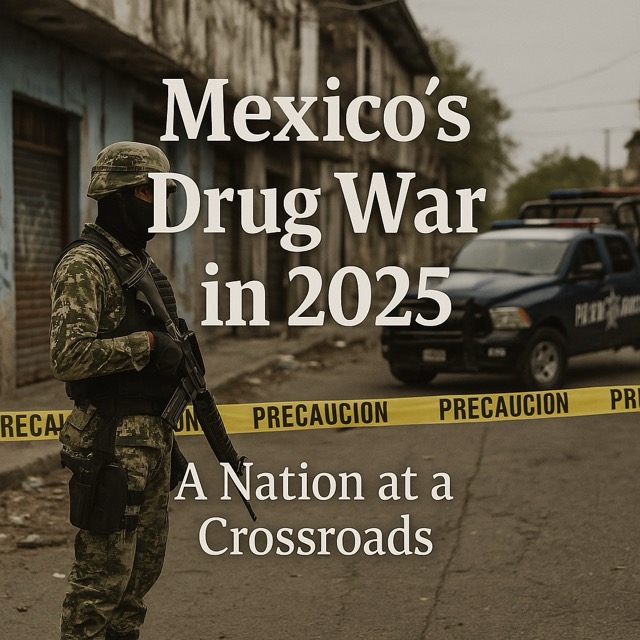
Rising Violence and Cartel Fragmentation
The fragmentation of the Sinaloa Cartel has led to internal turf wars, particularly in Culiacán, resulting in increased violence and civilian casualties. Rival factions, including the Jalisco New Generation Cartel (CJNG), are exploiting this instability to expand their influence. In March 2025, authorities discovered an extermination camp operated by the CJNG in Teuchitlán, Jalisco, highlighting the brutal tactics employed by these organizations.
Sheinbaum’s New Security Strategy
President Sheinbaum has implemented a data-driven security strategy, focusing on intelligence gathering and coordinated operations. The formation of the National Operations Unit (UNO), an elite civilian force, aims to dismantle large criminal organizations effectively. This marks a significant shift from the previous ‘hugs, not bullets’ approach, emphasizing a more aggressive stance against organized crime.
U.S. Pressure and Diplomatic Tensions
The United States, under President Donald Trump, has designated several Mexican cartels as foreign terrorist organizations, enabling expanded counterterrorism tools. Discussions around potential drone strikes against cartel targets have emerged, raising concerns over sovereignty and international law. Mexico has firmly rejected any unilateral military action on its soil, emphasizing the need for cooperation and respect for its territorial integrity.
Humanitarian Impact and Civilian Suffering
The ongoing conflict has resulted in significant humanitarian consequences, including mass displacements, kidnappings, and loss of life. The discovery of clandestine sites, such as the Teuchitlán camp, underscores the severe human rights violations occurring amidst the drug war. Efforts to address these issues are complicated by corruption, impunity, and the pervasive influence of cartels in various sectors.
Conclusion
Mexico’s drug war in 2025 presents a complex and evolving challenge. The government’s intensified efforts to combat organized crime, coupled with international dynamics, particularly with the United States, shape a precarious landscape. Addressing the root causes of violence, strengthening institutions, and fostering international collaboration remain crucial for achieving lasting peace and security.

 The Tower Post