Political Turmoil, Rising Crime, and Economic Uncertainty Shape Peru’s 2025 Outlook

Political Crisis and Governance Challenges
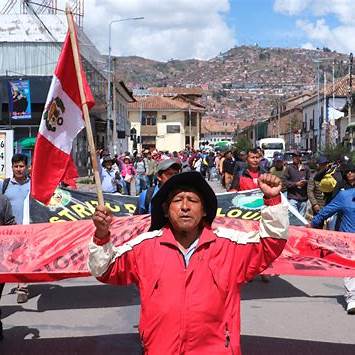
Peru remains mired in political instability, with President Dina Boluarte’s administration under intense scrutiny. Assuming office in December 2022 following the ousting of President Pedro Castillo, Boluarte has faced persistent calls for early elections and widespread public dissatisfaction. Her approval ratings have plummeted, reaching a historic low of 3% in December 2024.
The political landscape is further complicated by a fragmented Congress, where power struggles and legislative gridlock hinder effective governance. In March 2024, Congress voted to restore the Senate, aiming to reestablish a bicameral legislature by 2026. However, this move has been met with skepticism, as critics argue it may consolidate power among established political factions rather than promote democratic reform.
Corruption remains a pervasive issue, with President Boluarte under investigation for allegedly receiving illicit contributions for her political campaign and expensive gifts from a provincial governor. Such scandals have eroded public trust in institutions and fueled social unrest.
Escalating Crime and Social Unrest
Peru faces a surge in violent crime, particularly affecting public transportation workers. In April 2025, transit workers in Lima staged a strike to protest the alarming rise in attacks, including the shooting of three bus drivers, one of whom died. The government responded by declaring a state of emergency and deploying security forces, but these measures have yet to restore public confidence.
Extortion has also become rampant, with criminal networks exploiting digital platforms to threaten individuals and businesses. In 2024, over 17,000 extortion cases were reported, highlighting the government’s struggle to maintain law and order.
Economic Outlook: Growth Amid Uncertainty
Despite political and social challenges, Peru’s economy shows signs of resilience. The central bank projects a 4% GDP growth in 2025, positioning Peru as one of Latin America’s fastest-growing economies. This growth is driven by strong commodity exports, particularly copper, and increased foreign investment in mining and infrastructure projects.
However, the economy faces headwinds, including a fiscal deficit that reached 3.6% of GDP in 2024—the highest since 1992, excluding pandemic years. To address this, the government plans to issue sovereign bonds, but concerns about over regulation and social unrest may deter investors.
Inflation remains within the central bank’s target range, with projections indicating a rate of 2.28% by the end of 2025. Nonetheless, the economic outlook is tempered by global uncertainties, including potential trade disruptions and fluctuating commodity prices.
Human Rights and Civil Society Under Pressure
Recent legislative actions have raised concerns about the state of human rights in Peru. In March 2025, Congress passed a law restricting the activities of non-governmental organizations (NGOs), limiting their ability to pursue legal action against the state for human rights abuses. Critics argue that this law undermines civil society and hampers efforts to hold the government accountable.
Furthermore, the government’s response to protests has been marked by allegations of excessive force and human rights violations. In July 2024, the top prosecutor’s office filed a complaint against Boluarte’s government for the deaths of 44 protesters during the 2022–2023 demonstrations. Such incidents have drawn international condemnation and highlight the ongoing challenges facing Peru’s democracy.
Conclusion
Peru stands at a critical juncture, grappling with political instability, rising crime, and economic uncertainty. While the economy shows potential for growth, underlying social and governance issues threaten to derail progress. Addressing corruption, restoring public trust, and safeguarding human rights are essential steps toward achieving long-term stability and prosperity.