As global powers reduce funding for humanitarian aid, African nations face the devastating consequences of a growing emergency.
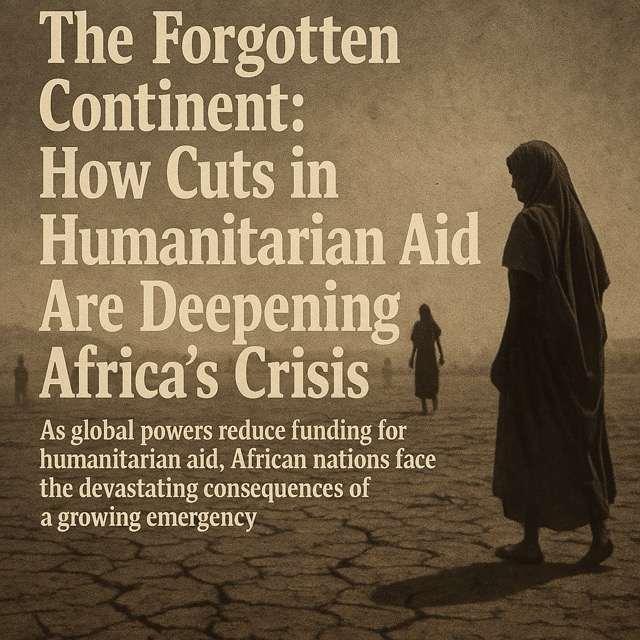
In recent years, the world has witnessed a significant reduction in humanitarian aid directed toward African countries. These cuts come at a time when the continent is grappling with a complex web of crises: armed conflict, climate change, food insecurity, public health emergencies, and displacement. While donor countries cite domestic financial pressures, critics warn that these reductions are short-sighted and potentially catastrophic, particularly for the most vulnerable populations in Africa.
The humanitarian needs across Africa are vast and increasing. According to the United Nations Office for the Coordination of Humanitarian Affairs (OCHA), over 150 million people in Africa are currently in need of humanitarian assistance — a number that has nearly doubled in the last decade. Countries like Sudan, the Democratic Republic of Congo, Somalia, and Ethiopia are facing multifaceted emergencies that require immediate and sustained international support.
Despite the rising demand, many traditional donor countries — including the United States, the United Kingdom, and members of the European Union — have significantly cut their aid budgets. The UK’s aid spending, for example, dropped from 0.7% of gross national income to 0.5% in 2021 and has yet to return to its previous levels. The effects of this decision have rippled across numerous African countries, leading to suspended programs, reduced food rations, and fewer medical supplies.
The consequences of these cuts are particularly dire in conflict zones and regions affected by climate shocks. In the Horn of Africa, which has experienced prolonged droughts linked to climate change, the World Food Programme (WFP) has been forced to cut food aid to millions. In Somalia, where nearly half the population faces acute food insecurity, funding shortages mean that only a fraction of those in need receive assistance.
The reduction in aid also hampers long-term development goals. Humanitarian aid does not just provide emergency relief — it supports essential infrastructure, education, and healthcare systems. Cutting this lifeline sets back years of progress and contributes to a cycle of dependency, instability, and migration. Furthermore, without international investment in resilience and recovery, the root causes of crises remain unaddressed.
Geopolitical shifts and emerging crises in other parts of the world — notably the war in Ukraine and the conflict in Gaza — have drawn the attention and resources of donor nations away from Africa. While these emergencies undoubtedly require international support, experts argue that the global community must avoid a “zero-sum” approach to humanitarian funding. Ignoring African crises today may lead to greater global instability tomorrow.
Civil society organizations and local actors have called for a rethinking of global priorities. Many emphasize the importance of localizing aid — channeling more resources directly to African-based NGOs and community organizations that are often better positioned to respond quickly and effectively. Additionally, there is a growing movement urging donor countries to integrate climate finance with humanitarian aid, especially in regions like the Sahel and East Africa, where environmental changes are both a cause and a consequence of humanitarian crises.
Ultimately, the international community faces a stark choice: recommit to humanitarian values and shared global responsibility, or allow millions in Africa to be forgotten. Restoring and expanding humanitarian funding is not only a moral imperative — it is also a strategic investment in global peace, security, and human dignity.
The world cannot afford to look away.

 The Tower Post