Implications for Global Trade and China’s Economic Strategy

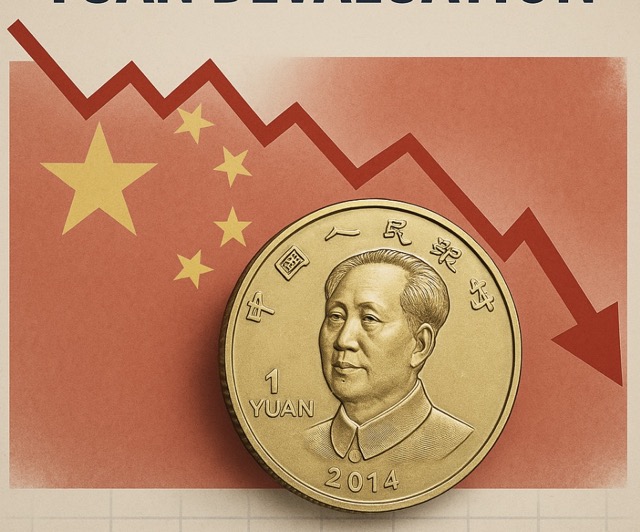
The Chinese yuan (CNY) has experienced several waves of devaluation in recent years, with significant implications for the global economy. The devaluation of a currency typically means a deliberate downward adjustment to the value of a country’s currency relative to another currency, group of currencies, or standard. In the case of China, the yuan’s devaluation has been partly driven by internal economic policies, trade tensions, and global financial shifts.
One of the primary motivations behind China’s decision to allow its currency to devalue is to maintain export competitiveness. A weaker yuan makes Chinese goods cheaper for foreign buyers, thereby boosting demand for exports. This strategy has proven effective in supporting Chinese manufacturers, especially during periods of economic slowdown or global recession. For example, during the U.S.-China trade war, the Chinese government allowed the yuan to weaken to mitigate the impact of U.S. tariffs on Chinese exports.
However, currency devaluation is a double-edged sword. While it supports exports, it also makes imports more expensive. For a country like China, which relies on imported technology, raw materials, and energy, a weaker yuan can increase production costs and inflationary pressure. Moreover, it can erode consumer purchasing power, as imported goods and international travel become more costly for Chinese citizens.
The yuan’s devaluation also has global ramifications. It exerts downward pressure on other emerging market currencies, as these economies must remain competitive in global trade. Additionally, it can affect global commodity prices, particularly in sectors where China is a major consumer, such as oil, metals, and agriculture. The depreciation of the yuan can also spark concerns of a “currency war,” where countries competitively devalue their currencies to gain trade advantages.
Another dimension to consider is the impact on global financial markets. A sudden or sharp devaluation of the yuan can trigger volatility in stock markets, especially in Asia. It can also affect investor confidence and capital flows, leading to outflows from emerging markets into perceived safe-haven assets such as the U.S. dollar or gold.
From a policy standpoint, the People’s Bank of China (PBOC) plays a crucial role in managing the yuan’s exchange rate. While China has gradually moved towards a more market-driven exchange rate mechanism, the central bank still intervenes regularly to stabilize the currency. This has led to a complex and sometimes opaque currency regime, which is closely monitored by global investors and policymakers.
In conclusion, the devaluation of the Chinese yuan is a strategic tool that Beijing uses to manage its economic challenges and maintain its export-driven growth model. However, this strategy must be carefully balanced against the risks of inflation, capital flight, and international backlash. As China continues to evolve its economic model and integrate more deeply into the global economy, the management of the yuan will remain a critical issue with far-reaching consequences.