How Gang Violence and Political Instability Are Plunging the Nation Into Chaos

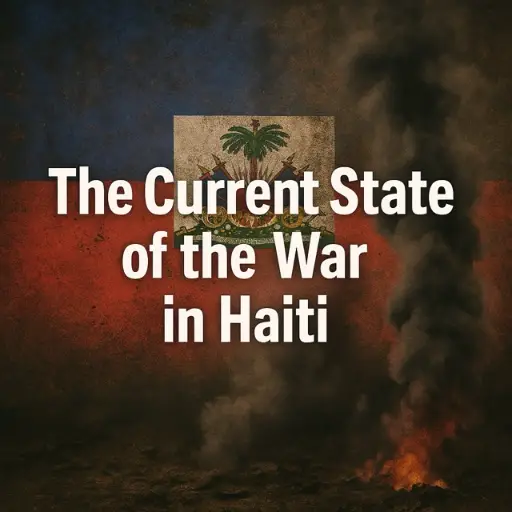
Haiti, the Caribbean nation long plagued by political turmoil and natural disasters, is once again in the grip of a profound crisis. Over recent months, the country has descended into near-anarchy as gang violence escalates, government authority collapses, and humanitarian conditions worsen. The situation has reached such a critical point that international actors are now considering new forms of intervention to stem the tide of violence and instability.
The root of the current crisis lies in a complex web of governance failures, economic collapse, and the rise of powerful criminal organizations. Following the assassination of President Jovenel Moïse in 2021, the country has struggled to form a stable government. Interim leaders have come and gone, elections have been postponed indefinitely, and power vacuums have allowed heavily armed gangs to seize control of entire neighborhoods in the capital, Port-au-Prince.
These gangs, often better equipped than the police, have created zones of terror where kidnappings, extortion, and massacres are commonplace. According to the United Nations, nearly 80% of the capital is now under gang influence. Civilians are caught in the crossfire, with thousands forced to flee their homes, schools shut down, and access to basic services severely restricted. The violence has disproportionately affected women and children, deepening Haiti’s already dire humanitarian crisis.
The international community has responded with growing alarm. The United Nations, along with the United States, Canada, and Caribbean nations, has debated the deployment of a multinational security force to restore order. Kenya has offered to lead such a mission, though logistical and legal hurdles remain unresolved. Critics warn that any foreign intervention must avoid the mistakes of past missions that have left mixed legacies and, in some cases, contributed to further instability.
Economically, the country is in freefall. Inflation is rampant, unemployment is widespread, and the informal economy dominated by illicit activities continues to grow. The Haitian gourde has lost significant value, and many families cannot afford basic necessities like food, clean water, or medicine. NGOs and aid organizations are struggling to deliver services due to security concerns, and some have even suspended operations entirely.
Politically, the lack of legitimate leadership has paralyzed any meaningful national response. Ariel Henry, Haiti’s de facto Prime Minister, has faced widespread opposition and accusations of illegitimacy. While efforts to form a transitional government are underway, these negotiations are slow and fragile, hindered by deep mistrust among political factions and civil society groups.
The impact of the crisis is also being felt across the region. Thousands of Haitians have fled the country, seeking asylum in neighboring countries and beyond. The migration wave has overwhelmed regional resources, leading to diplomatic tensions and renewed calls for international coordination. The United States, in particular, has tightened border enforcement while also increasing humanitarian aid and support for democratic institutions in Haiti.
In the face of this unprecedented crisis, Haiti’s future hangs in the balance. Restoring order will require more than just military presence—it will demand a long-term commitment to institution-building, economic recovery, and justice reform. Local actors must be empowered to lead, and any international efforts must prioritize Haitian sovereignty and the needs of its people.
As the world watches, the stakes continue to rise. Without decisive action, Haiti risks becoming a failed state on the doorstep of the Americas. But with the right mix of support, leadership, and resolve, there is still hope for recovery and renewal in a country that has endured so much and yet remains resilient.