How the French Automaker Turned Trade Turbulence into Strategic Advantage
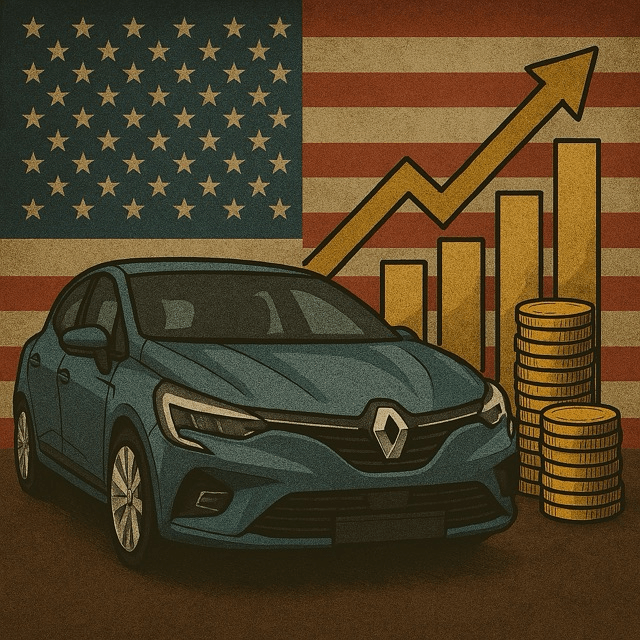
As former U.S. President Donald Trump continues to stir economic uncertainty with his aggressive trade rhetoric, particularly in relation to new proposed tariffs on European and Chinese auto imports, one unexpected beneficiary has begun to stand out: Renault. The French automaker, long overshadowed by bigger players in the U.S. and Asian markets, has found a unique edge in navigating the turbulent waters of tariff wars, emerging stronger and more strategically positioned in global supply chains.
Trump’s latest proposal to impose steep tariffs on foreign-made vehicles—citing national security and economic sovereignty—has created shockwaves throughout the auto industry. Automakers reliant on exporting to or manufacturing in the U.S. face looming price hikes, disrupted production lines, and diminished competitiveness. Yet, amid the panic, Renault appears remarkably insulated. Why? Because the company had already recalibrated its operations to prioritize emerging markets, local manufacturing, a…
Unlike some of its European competitors who doubled down on the American market over the past decade, Renault made a conscious decision to avoid deep entanglement in U.S. supply chains. Instead, the automaker expanded aggressively into Latin America, North Africa, India, and Eastern Europe—regions now proving less vulnerable to the geopolitical and economic crossfire ignited by Trump’s tariff agenda.
Moreover, Renault’s early investments in modular platforms and flexible production hubs have given it a critical agility advantage. Factories in Morocco, Romania, and Brazil are capable of shifting production rapidly in response to market disruptions. This means that as tariffs drive up costs for companies reliant on fixed, transcontinental logistics, Renault can adapt with minimal friction. The company’s diversified supplier network—largely rooted outside of U.S.-China trade zones—further enhances its re…
Financial markets have taken note. Renault’s stock surged following Trump’s tariff announcements, as investors sought resilient players amid anticipated market volatility. Analysts highlighted Renault’s “anti-fragile” profile—a firm that doesn’t merely survive in chaos, but thrives in it. In an industry known for thin margins and intense capital requirements, such positioning is rare and increasingly valuable.
Strategically, Renault has also doubled down on partnerships that insulate it from tariff fallout. Its ongoing alliance with Nissan and Mitsubishi, while tested in recent years, still provides access to shared technologies, EV platforms, and international scale. Meanwhile, Renault’s joint ventures in India and China offer access to key markets without relying on exports—thus minimizing exposure to cross-border tariffs.
Critically, Renault’s policy of localization is proving prescient. By building cars closer to where they are sold, the automaker avoids many of the costs and uncertainties associated with international tariffs. This approach aligns well with the new era of protectionism and deglobalization, where political leaders increasingly favor domestic production over global integration.
Of course, the road ahead is not without challenges. The global auto industry is still navigating semiconductor shortages, rising raw material costs, and pressure to electrify fleets under evolving emissions regulations. But Renault’s strategy suggests that it is better equipped than most to meet these headwinds. Its renewed focus on affordable EVs for global markets—particularly in regions underserved by Western EV brands—further strengthens its long-term outlook.
From a geopolitical standpoint, Renault’s success also signals a shift in the global automotive power map. As U.S. trade policy under Trump grows more isolationist and confrontational, European firms like Renault are being forced to innovate around the constraints. Rather than lobbying against the tariffs or retreating from international markets, Renault has embraced flexibility, resilience, and diversification—traits that increasingly define the winners in the post-globalization economy.
In conclusion, while many automakers scramble to contain the damage from Trump’s tariff threats, Renault’s calculated detachment from U.S. dependencies and its global operational flexibility have positioned it as a standout beneficiary. In a world where volatility is the new norm, Renault isn’t just weathering the storm—it’s steering through it with confidence. The company’s success is not merely a fortunate outcome, but a testament to strategic foresight in an era of geopolitical and economic transfor…

 The Tower Post