Examining the Controversial Claims of Market Manipulation and Political Influence for Financial Gain

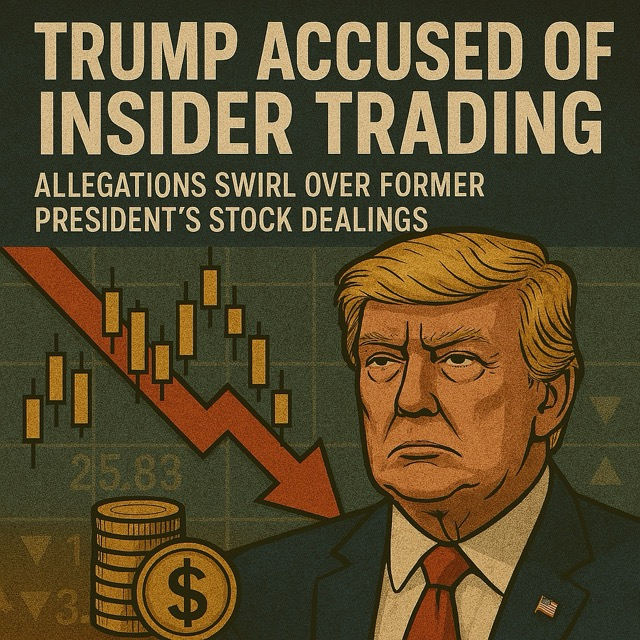
As the 2024 U.S. election cycle heats up, new allegations have emerged surrounding former President Donald Trump, this time not for political misconduct but for financial manipulation—specifically, suspected insider trading activities. The claims have reignited debates around the intersection of politics and finance, and how the power wielded by political figures can influence not only policy but markets themselves.
According to investigative reports and preliminary findings by regulatory observers, several suspicious trading patterns have been linked to individuals and entities closely connected to Trump. These trades—executed just before significant policy announcements, legal decisions, or geopolitical statements—have yielded sizable profits and drawn scrutiny from financial watchdogs. While no formal charges have been filed, the circumstantial evidence is prompting calls for greater transparency and investig…
Insider trading, the act of buying or selling securities based on material, non-public information, is a violation of U.S. securities laws. It erodes market integrity and creates an uneven playing field for ordinary investors. While such activities are typically associated with corporate executives, the possibility that a former president—or those in his orbit—might have used privileged information to influence trades raises the stakes exponentially.
Critics argue that Trump’s post-presidential role as a political influencer, combined with his persistent media presence and connections to high-net-worth individuals and hedge funds, creates fertile ground for such abuses. His recent public statements on economic policy, China, energy, and interest rates have often coincided with abrupt market movements. In several instances, trading data reveals unusually timed and well-placed investments that benefited from these swings.
Moreover, Trump’s political fundraising entities, Super PACs, and aligned donors have reportedly maintained active portfolios with substantial holdings in sectors sensitive to Trump’s influence. Technology, defense, and energy stocks in particular have seen notable fluctuations that some analysts believe correlate with public statements and private briefings. The concern, according to legal experts, lies not just in who may have acted on insider information, but whether such information was shared intentionall…
Supporters of Trump dismiss the allegations as politically motivated, citing a lack of concrete evidence and the common volatility of markets during election cycles. They argue that Trump, like any public figure, has a right to express views on the economy and that attributing market movement to deliberate manipulation is speculative at best. Nevertheless, the Securities and Exchange Commission (SEC) and the Commodity Futures Trading Commission (CFTC) are reportedly reviewing the relevant transactions.
From a legal standpoint, proving insider trading involving a political figure is particularly challenging. The complexity of influence, timing, and indirect communication often makes it difficult to draw clear lines between speech and intent. However, legal scholars warn that if even a fraction of the allegations hold merit, the implications for public trust in both markets and democratic institutions are severe.
What makes these allegations especially potent is the backdrop of Trump’s ongoing legal troubles and his potential return to political power. If he were to re-enter the presidency while under financial investigation, the conflict of interest could be unprecedented. It would raise constitutional questions about the limits of presidential immunity in financial misconduct cases and challenge the enforcement capacity of federal agencies.
Additionally, the controversy has renewed calls for stricter financial disclosure laws for current and former public officials. Proposals in Congress to limit or ban stock trading by lawmakers and high-ranking officials are gaining traction, fueled by public frustration over perceived insider advantages among political elites. If the Trump insider trading allegations continue to gain momentum, they may catalyze bipartisan reform efforts previously stalled in the legislative process.
In the court of public opinion, perception may be as damaging as reality. Even without a formal indictment, the narrative of a former president using political insight for personal gain deepens polarization and cynicism. For markets, it introduces an additional layer of uncertainty, as investors try to discern whether statements from influential figures are made in good faith or designed to benefit hidden portfolios.
In conclusion, while the insider trading allegations against Donald Trump remain unproven, their gravity cannot be ignored. They represent a critical intersection of political power and financial ethics—one that demands rigorous investigation and institutional accountability. As regulators, lawmakers, and the public weigh the evidence, the outcome of this case may not only shape Trump’s future but set a lasting precedent for how financial behavior is scrutinized in the highest echelons of power.