Trade Wars, Economic Uncertainty, and the Future of Prestige Brands
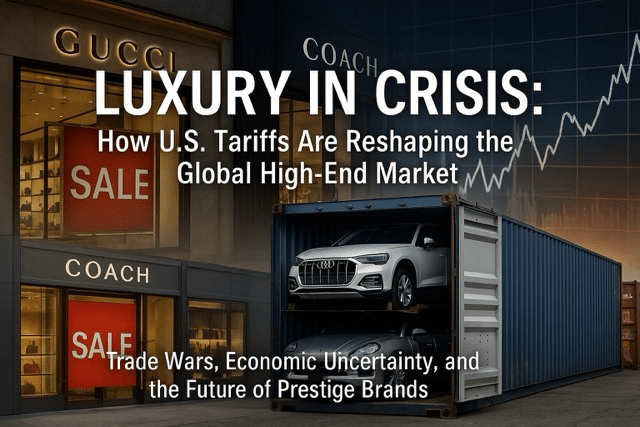
The global luxury sector, long considered resilient to economic fluctuations, is facing unprecedented challenges in 2025. The resurgence of U.S. tariffs under President Donald Trump’s administration has disrupted international trade, leading to market volatility and a reevaluation of consumer spending habits. This article explores the multifaceted impact of these developments on the luxury industry, from fashion and automobiles to real estate.
In April 2025, the Trump administration imposed sweeping tariffs on imports from over 60 countries, including a 20% tax on European Union luxury goods, 10% on U.K. imports, and 31% on Swiss products. These measures have led to a significant downturn in the luxury market, with global sales projected to decline by up to 2% this year—the first contraction since the Great Recession.
European luxury conglomerates such as LVMH, Kering, and Richemont have seen their stock values decrease, reflecting investor concerns over reduced profitability and consumer demand. Analysts warn that the combination of higher import costs and a potential global recession poses a substantial threat to the industry’s stability.
The economic uncertainty has led to a noticeable shift in consumer preferences. Affluent buyers are gravitating towards “quiet luxury”—understated, high-quality products that emphasize craftsmanship over conspicuous branding. This trend mirrors consumer behavior during previous downturns, where subtlety and timelessness took precedence over bold, attention-grabbing designs.
Additionally, the upper-middle-class segment, which had increasingly contributed to luxury sales, is now pulling back due to rising prices and economic concerns. This contraction in the customer base is prompting brands to reassess their strategies, focusing more on their core affluent clientele.
Luxury automobile manufacturers are among the hardest hit by the new tariffs. European brands like Ferrari, Rolls-Royce, and Aston Martin face a 25% tariff on imported vehicles, leading to price increases of up to 10% in the U.S. market. Some companies have paused shipments, while others are considering relocating production to mitigate the impact.
Interestingly, the luxury real estate market is experiencing a surge as investors seek stable assets amidst financial market volatility. High-end properties are being viewed as safe havens, with sales reaching record levels. This trend underscores the unique position of real estate within the luxury sector, offering both tangible value and investment security.
Luxury brands are adopting various strategies to navigate this challenging landscape. Some are considering price adjustments to maintain competitiveness, while others are enhancing their digital presence and focusing on storytelling that emphasizes heritage and quality. Mergers and acquisitions are also on the rise, as seen in Prada’s recent acquisition of Versace, aiming to consolidate resources and expand market share.
Looking ahead, the luxury sector must balance tradition with innovation, adapting to changing consumer expectations while preserving the exclusivity that defines it. The ability to pivot and respond to global economic shifts will determine which brands emerge stronger in the post-tariff era.
The luxury industry’s current challenges underscore the interconnectedness of global economies and the sensitivity of high-end markets to policy changes. While the road ahead is fraught with uncertainty, brands that demonstrate agility, authenticity, and a deep understanding of their clientele are more likely to thrive. As the sector recalibrates, its evolution will offer insights into the broader dynamics of consumer behavior and international trade.

 The Tower Post