What President Xi Jinping’s Upcoming Regional Visit Signals for Trade, Security, and China’s Expanding Influence

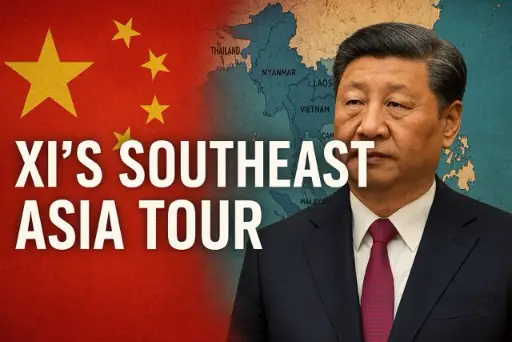
As global tensions rise and the geopolitical balance in the Indo-Pacific continues to evolve, Chinese President Xi Jinping is preparing for a high-profile diplomatic tour of Southeast Asia in the coming days. The visit, which will include stops in countries such as Vietnam, Thailand, Malaysia, and Indonesia, is expected to focus on deepening economic ties, enhancing regional security cooperation, and advancing China’s vision for a multipolar world order.
Xi’s trip comes at a critical juncture. The United States has been actively strengthening its alliances in the region through initiatives like AUKUS and expanded military exercises with the Philippines and Japan. Meanwhile, Southeast Asian nations are increasingly wary of being caught in the middle of a strategic rivalry between Beijing and Washington. Xi’s tour appears designed to reassure regional leaders of China’s peaceful intentions while reinforcing its central role in regional development and inte…
A cornerstone of Xi’s agenda is the Belt and Road Initiative (BRI), China’s signature global infrastructure project. In meetings with regional leaders, Xi is expected to promote expanded rail, port, and digital connectivity projects. Countries such as Laos and Cambodia have already benefited from BRI investments, and new agreements are likely to emerge during this tour. At the same time, Beijing hopes to counter narratives that frame the BRI as a tool for debt diplomacy by showcasing successful, mutu…
Trade and economic diplomacy will also be central. China remains the largest trading partner for most Southeast Asian nations, and Xi’s trip will likely result in new bilateral trade deals and investment frameworks. With economic recovery still uneven in the post-pandemic world, China is positioning itself as a reliable partner offering both market access and financial support.
Security discussions will also be high on the agenda. As tensions in the South China Sea persist, Xi is expected to promote the long-stalled Code of Conduct between China and ASEAN. While territorial disputes remain unresolved, Beijing is seeking to frame itself as a stabilizing force that prioritizes diplomacy over confrontation—an image complicated by frequent naval patrols and military installations in contested waters.
Observers also note the symbolic significance of the visit. Xi’s presence in the region reflects a more active personal diplomacy following China’s period of COVID-19 isolation. It signals to the international community that Beijing is re-engaging directly and assertively. For many Southeast Asian nations, this provides an opportunity to extract economic concessions while maintaining a delicate balancing act between the two superpowers.
Domestically, the trip reinforces Xi’s image as a statesman with global vision. It offers a counter-narrative to criticism of China’s slowing economy and tense relations with the West. By showcasing international engagement, Xi seeks to bolster his leadership credentials and project confidence in China’s trajectory under his continued rule.
However, the visit is not without challenges. Public opinion in some Southeast Asian countries is increasingly skeptical of Chinese influence, particularly in areas related to land use, environmental degradation, and labor practices. Anti-China protests have occurred in the past, and Xi’s team will be keen to avoid any incidents that could overshadow the diplomatic agenda.
In conclusion, Xi Jinping’s upcoming Southeast Asia tour is more than a routine diplomatic trip—it is a strategic maneuver aimed at reinforcing China’s influence in one of the world’s most dynamic regions. With the Indo-Pacific becoming the focal point of global power competition, Xi’s engagements will shape not only China’s regional standing but also the broader contours of global diplomacy in the years ahead.