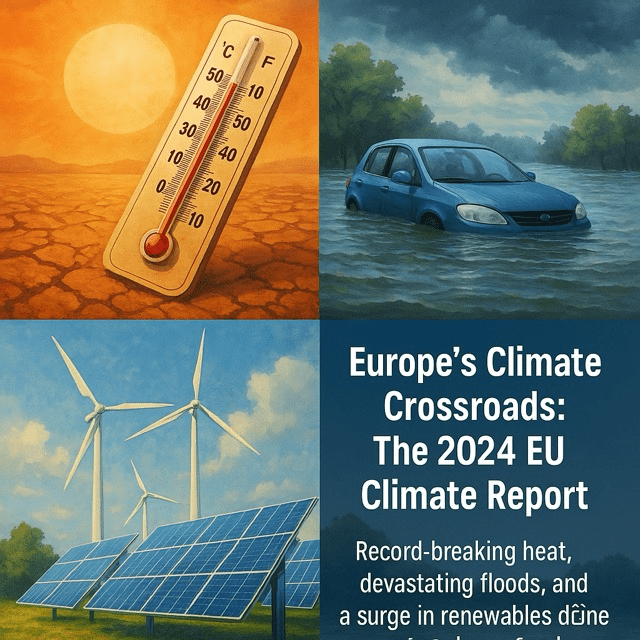
Record-breaking heat, devastating floods, and a surge in renewables define a pivotal year for the EU’s climate trajectory
Introduction
The 2024 EU Climate Report presents a stark overview of a year marked by unprecedented climate extremes across Europe. From record-breaking temperatures to widespread floods, the continent faced significant environmental challenges. Simultaneously, strides in renewable energy adoption signal a transformative shift in the EU’s approach to climate resilience and sustainability.
A Year of Climate Extremes
In 2024, Europe experienced its warmest year on record, with average temperatures surpassing 1.5°C above pre-industrial levels for the first time. This milestone underscores the accelerating pace of climate change on the continent.
The year was characterized by severe weather events:
– Heatwaves: Southern and Southeastern Europe endured prolonged heatwaves, with temperatures reaching up to 46.8°C in Cyprus.
– Floods: Europe faced its most extensive flooding in over a decade, affecting 30% of the continent’s river network and resulting in at least 335 deaths.
– Wildfires: Portugal witnessed wildfires that consumed 110,000 hectares in a single week, highlighting the increasing risk of fire-related disasters.
These events not only caused human and economic losses but also emphasized the urgent need for comprehensive climate adaptation strategies.
Progress in Renewable Energy
Amid these challenges, the EU made significant progress in its transition to renewable energy:
– Renewable Energy Generation: In 2024, 47% of the EU’s electricity was generated from renewable sources, with wind power surpassing gas for the second consecutive year.
– Emission Reductions: The EU achieved an 8% reduction in greenhouse gas emissions, attributed to the continued shutdown of coal-fired power plants and increased use of renewable energy.
These developments reflect the EU’s commitment to its climate targets and its leadership in global climate action.
Challenges and the Path Forward
Despite these advancements, the EU faces ongoing challenges:
– Policy Implementation: Current policies are projected to achieve only a 43% reduction in emissions by 2030, falling short of the 55% target.
– Climate Risks: The European Environment Agency warns that Europe is not adequately prepared for escalating climate risks, with Southern Europe particularly vulnerable to heatwaves and water scarcity.
To address these issues, the EU must accelerate its climate action plans, enhance infrastructure resilience, and ensure equitable support for all member states in the transition to a sustainable future.
Conclusion
The 2024 EU Climate Report serves as a critical reminder of the pressing need for comprehensive climate action. While the EU has made commendable progress in renewable energy adoption and emission reductions, the increasing frequency and severity of climate-related events underscore the urgency of bolstering resilience and adaptation measures. As Europe stands at a climate crossroads, decisive and inclusive action will determine the continent’s environmental and socio-economic trajectory in the years to come.




 The Tower Post