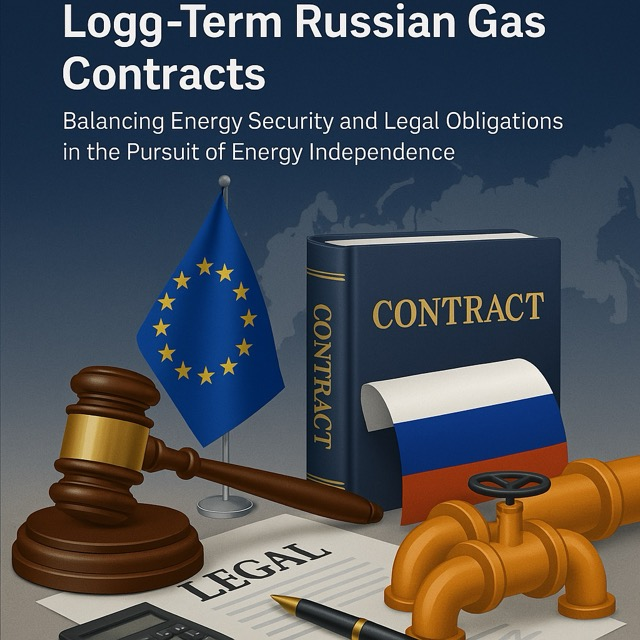
Balancing Energy Security and Legal Obligations in the Pursuit of Energy Independence

Introduction
In the wake of geopolitical tensions and the European Union’s commitment to reduce dependency on Russian fossil fuels, the legal termination of long-term gas contracts with Russian suppliers has become a focal point. This article explores the legal avenues available to the EU and its member states to exit these contracts, the challenges involved, and the broader implications for energy security and international law.
Legal Mechanisms for Contract Termination
1. Force Majeure Clauses
Force majeure clauses in contracts allow parties to terminate or suspend obligations due to extraordinary events beyond their control. The EU has considered invoking these clauses in the context of the Russian invasion of Ukraine and subsequent supply disruptions. The European Commission has indicated that such geopolitical events could constitute force majeure, providing legal grounds for termination without penalties.
2. Arbitration Proceedings
Several European energy companies have pursued arbitration to resolve disputes with Russian suppliers. Notably, German utility Uniper won a $14 billion arbitration ruling against Gazprom, allowing it to terminate existing gas supply contracts and receive compensation for undelivered gas since mid-2022. Such legal precedents empower other companies to seek similar remedies.
3. EU Sanctions and Regulatory Measures
The EU has implemented sanctions targeting the Russian energy sector, including bans on new investments and restrictions on the import of certain energy products. These measures can render the performance of existing contracts legally and practically unfeasible, providing a basis for termination.
Challenges and Considerations
– Contractual Obligations: Long-term contracts often include stringent terms and penalties for early termination. Legal proceedings can be lengthy and complex, requiring substantial evidence to justify termination.
– Energy Security: Abrupt termination of contracts may lead to supply shortages and increased energy prices. The EU must ensure alternative energy sources are secured to maintain stability.
– Political Implications: Decisions to terminate contracts have diplomatic repercussions, potentially affecting relations with Russia and other stakeholders.
The Path Forward
The EU’s strategy involves a combination of legal action, diversification of energy sources, and policy reforms. The upcoming roadmap to phase out Russian oil and gas imports, scheduled for release in May 2025, will provide further guidance on managing existing contracts and transitioning to alternative energy sources.
Conclusion
Terminating long-term gas contracts with Russian suppliers is a complex endeavor, intertwining legal, economic, and political factors. By leveraging legal mechanisms such as force majeure clauses, arbitration, and regulatory measures, the EU aims to uphold its commitment to energy independence while navigating the challenges inherent in altering established contractual relationships.