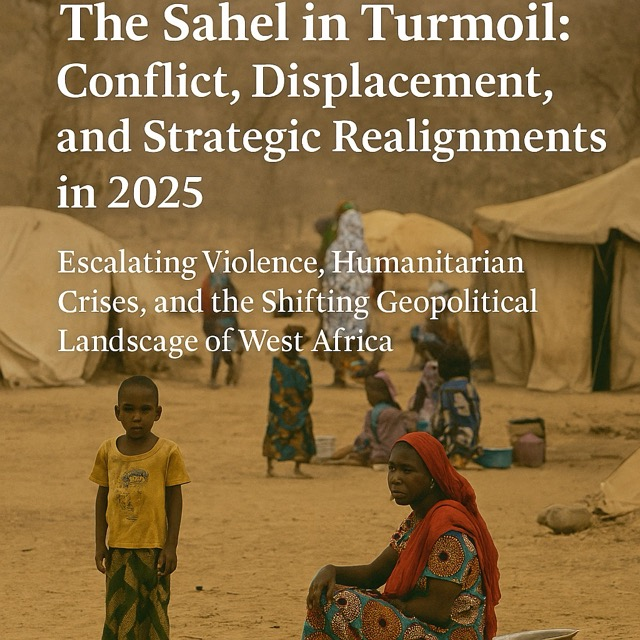
Escalating Violence, Humanitarian Crises, and the Shifting Geopolitical Landscape of West Africa

Introduction
In 2025, the Sahel region of Africa—encompassing countries like Mali, Burkina Faso, Niger, and extending into coastal nations such as Benin—faces unprecedented challenges. The convergence of escalating jihadist insurgencies, political instability, and severe humanitarian crises has transformed the region into a focal point of global concern. This article delves into the multifaceted issues plaguing the Sahel, examining the roots of the conflict, the dire humanitarian situation, and the evolving geopolitical dynamics.
Escalating Jihadist Insurgencies
The Sahel has witnessed a surge in violent extremist activities, with groups like Jama’at Nasr al-Islam wal-Muslimin (JNIM) and the Islamic State in the Greater Sahara (ISGS) expanding their operations. Notably, in January 2025, JNIM launched a deadly attack in Benin’s Alibori Department, resulting in the deaths of 28 soldiers. Similarly, in March, ISGS was responsible for a brutal assault on a mosque in Fambita, Niger, killing 44 worshippers. These incidents underscore the growing reach and brutality of jihadist groups in the region.
Humanitarian Catastrophe
The ongoing conflicts have precipitated a humanitarian disaster. As of August 2024, nearly 5 million people were forcibly displaced across the Sahel, with significant numbers fleeing to neighboring countries. In Burkina Faso alone, projections estimate that the number of internally displaced persons could reach 3.65 million by the end of 2025. The United Nations reports that over 40 million people in West and Central Africa are struggling with food insecurity, a situation exacerbated by conflict, economic instability, and climate shocks.
Political Instability and Strategic Realignments
The political landscape in the Sahel is marked by instability. Military juntas have taken control in Mali, Burkina Faso, and Niger, forming the Alliance of Sahel States (AES) and distancing themselves from Western allies. These nations have expelled French forces and sought closer ties with Russia, which has pledged military support to the AES, including the provision of advanced weaponry and training. This shift signifies a realignment of geopolitical interests in the region, with potential implications for international security.
Impact on Coastal West Africa
The instability in the Sahel has begun to spill over into coastal West African nations. Benin, traditionally a stable country, has experienced increased jihadist activity, including the aforementioned attack in Alibori. The spread of violence threatens to destabilize the broader West African region, posing challenges for regional security and economic development.
International Response and the Path Forward
The international community faces the daunting task of addressing the multifaceted crises in the Sahel. Humanitarian organizations, including UNHCR, have called for increased funding to support displaced populations and bolster resilience among host communities. However, the shifting alliances and political dynamics complicate international engagement. A comprehensive approach that combines humanitarian assistance, support for political stability, and strategies to counter violent extremism is essential to address the root causes of the crisis and pave the way for a more stable Sahel.
Note: This article is based on information available as of April 15, 2025. For the most current updates, please refer to official news sources and humanitarian organizations.