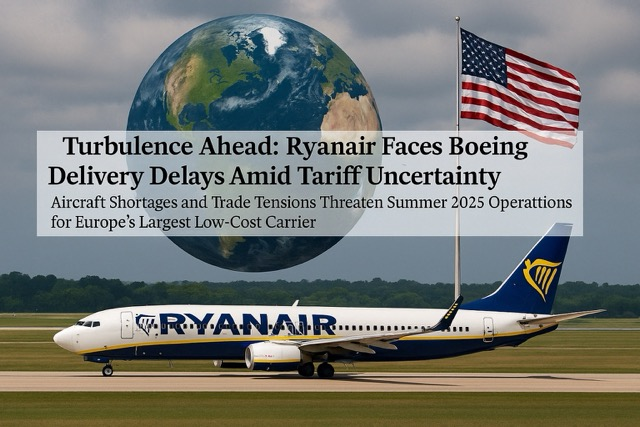
Aircraft Shortages and Trade Tensions Threaten Summer 2025 Operations for Europe’s Largest Low-Cost Carrier

Ryanair, Europe’s largest low-cost airline, is confronting significant operational challenges due to delays in the delivery of Boeing aircraft. These setbacks, compounded by potential U.S. tariffs, threaten to disrupt the airline’s growth trajectory and summer 2025 operations.
Ryanair’s ambitious expansion plans have been hampered by Boeing’s failure to deliver aircraft on schedule. The airline anticipated receiving 57 Boeing 737 MAX 8-200 aircraft by June 2024 but is now expected to receive only 40. This shortfall has forced Ryanair to reduce approximately 10 aircraft lines of flying during peak summer months, affecting schedule changes primarily in frequencies on existing routes.
The delivery delays have led to adjustments in high-cost airports, affecting passengers who have been notified of alternative flight times or offered full refunds. Ryanair’s CEO, Michael O’Leary, has expressed frustration over the situation, stating that the airline is “over-scheduled, over-crewed, and over-costed” due to the mismatch in resources and operations.
In addition to delivery delays, Ryanair faces potential cost increases from U.S. tariffs imposed following former President Trump’s trade policies. The airline is considering replacing its Boeing 737 fleet with Chinese-made Comac C919 aircraft if the price is sufficiently lower than that of Airbus models. Although Ryanair later clarified that it is not currently exploring Chinese purchases, market conditions may prompt further consideration.
Ryanair’s CEO has also expressed hope that the Trump administration would better support Boeing’s recovery than the previous administration. O’Leary criticized the Biden administration for not being helpful to Boeing, mentioning the politicization of the Alaskan air door issue.
The combination of delivery delays and tariff uncertainties has led Ryanair to revise its passenger growth forecasts. The airline now expects to carry 206 million passengers in the next fiscal year, down from an earlier estimate of 210 million, following delays in Boeing’s aircraft deliveries. This marks the second downward revision, with the initial forecast being 215 million.
Despite these challenges, Ryanair reported a net profit of €149 million in the third quarter of fiscal 2025, compared to €15 million in the same period last year. Passenger traffic increased by 9%, reaching 45 million travelers, driven by strong demand during Christmas and New Year.
Ryanair’s current predicament underscores the complexities of global supply chains and the far-reaching impacts of geopolitical tensions on the aviation industry. As the airline navigates these challenges, its ability to adapt and strategize will be crucial in maintaining its position as Europe’s leading low-cost carrier.