Strategic Minerals, Global Tensions, and the Future of High-Tech Industries

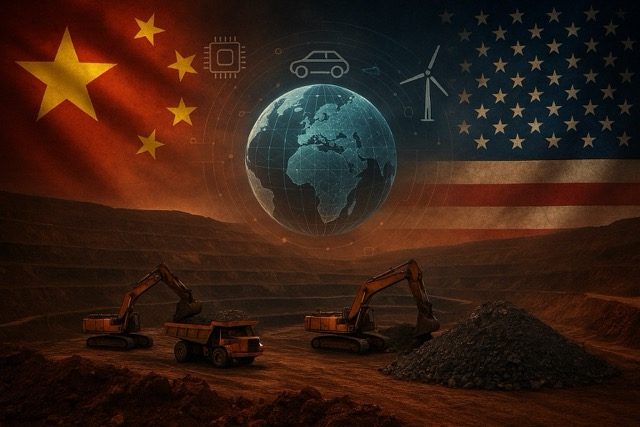
In a bold geopolitical move that is reverberating across global markets, China has announced a comprehensive ban on the export of rare earth elements to the United States. This decision marks a significant escalation in the ongoing economic tensions between the two superpowers and has triggered a wave of concern among industries dependent on these critical resources.
Rare earth elements (REEs) are a group of 17 metallic elements essential for the manufacturing of a wide range of high-tech devices, including smartphones, electric vehicles, wind turbines, and advanced military systems. China controls over 60% of global rare earth production and an even larger share of the processing capacity. The country’s dominance in this strategic sector has long been a point of contention, especially given its history of using rare earths as a geopolitical lever.
The export ban, announced by China’s Ministry of Commerce, cites national security concerns and the protection of strategic resources as primary motivations. However, many analysts interpret the move as a direct response to increasing U.S. sanctions on Chinese technology companies and rising military tensions in the Asia-Pacific region.
The impact on the United States is expected to be profound. American manufacturers that rely on rare earths for critical components are now scrambling to secure alternative supplies. The Department of Defense, in particular, faces significant challenges, as rare earths are vital to the production of missile guidance systems, radar equipment, and other defense technologies.
Efforts to reduce dependency on Chinese rare earths have been underway in the U.S. for several years, with investments in domestic mining and partnerships with allied countries like Australia and Canada. Nevertheless, these initiatives remain in early stages and cannot yet compensate for the sudden halt in Chinese exports.
The ban also raises broader questions about the fragility of global supply chains and the risks of over-reliance on a single source for strategic materials. It is likely to accelerate international efforts to diversify supply and develop alternative technologies that reduce or eliminate the need for rare earths altogether.
From a geopolitical perspective, China’s decision underscores the growing use of economic tools as instruments of statecraft. It also serves as a warning to other nations about the importance of securing critical resources in an increasingly uncertain global landscape.
As the situation evolves, businesses and governments alike will be forced to adapt quickly. The rare earth export ban is not just a trade issue—it is a flashpoint in the broader struggle for technological and geopolitical supremacy in the 21st century.