Rising Hostilities in Kashmir Spark Fears of Full-Scale Conflict
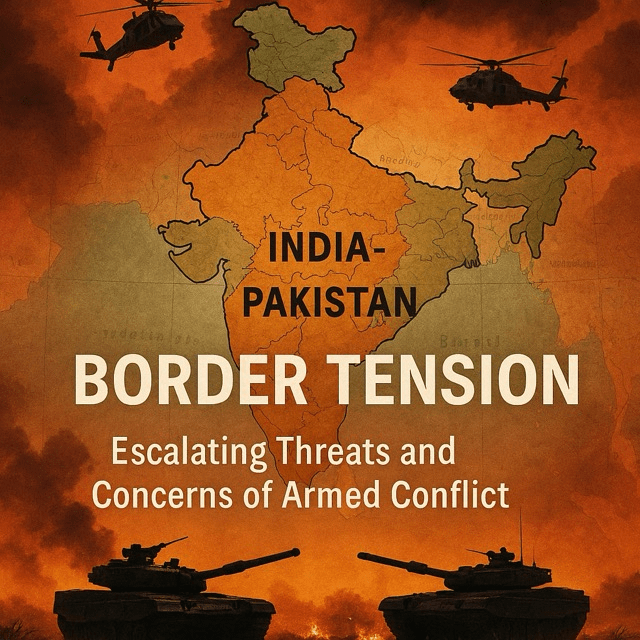
The long-standing conflict between India and Pakistan over the Kashmir region has once again escalated, raising alarm among international observers and prompting fears of a renewed military confrontation. The Line of Control (LoC), which divides Indian-administered and Pakistani-administered Kashmir, has witnessed a surge in skirmishes, with both sides accusing each other of ceasefire violations.
Renewed Tensions and Military Movements
In recent weeks, both India and Pakistan have bolstered their military presence along the LoC. Reports indicate increased troop deployments, heavy artillery movement, and frequent cross-border shelling. Civilians in border villages have been forced to evacuate or take shelter due to the growing threat of conflict. The Indian Army claims that militant infiltration attempts, allegedly supported by Pakistan, have intensified, prompting counter-insurgency operations.
On the other hand, Pakistan accuses India of aggressive posturing and targeting civilian settlements in Azad Jammu and Kashmir. The Pakistani government has lodged formal complaints with the United Nations, urging intervention to de-escalate tensions and investigate alleged human rights violations.
Diplomatic Deadlock and Historical Context
The relationship between the two nuclear-armed neighbors has been fraught with tension since their independence in 1947. The Kashmir issue remains the most contentious point, with three wars fought over the region. Despite a ceasefire agreement brokered in 2003 and reaffirmed in 2021, sporadic violence continues to undermine peace efforts.
Efforts at diplomacy have yielded limited success. Bilateral talks have stalled for years, largely due to mutual distrust and domestic political pressures. India maintains that Pakistan supports terrorist groups operating in Kashmir, while Pakistan argues that India is suppressing the rights of Kashmiri Muslims through military occupation and legal maneuvers, such as the abrogation of Article 370 in 2019.
International Response and Regional Implications
The international community has expressed concern over the escalation. The United Nations, the United States, and several European nations have called for restraint and a return to dialogue. However, both countries appear entrenched in their positions, with nationalist rhetoric dominating political discourse on both sides.
China, a strategic ally of Pakistan and a regional rival to India, has also weighed in, calling for a peaceful resolution while expressing support for Pakistan’s stance on Kashmir. This has added another layer of complexity to the regional security environment, where overlapping interests among major powers could influence the course of events.
Humanitarian Impact and Media Censorship
Beyond the geopolitical ramifications, the ongoing conflict is having a severe humanitarian impact. Civilians living near the LoC are facing displacement, loss of livelihood, and psychological trauma. Access to education, healthcare, and essential services has been disrupted in many areas.
Media coverage remains tightly controlled, with independent journalism facing restrictions on both sides. This information vacuum has allowed propaganda and misinformation to flourish, further inflaming public opinion and hindering efforts toward reconciliation.
Conclusion
As tensions mount on the India-Pakistan border, the risk of war looms large. Without meaningful diplomatic engagement, the situation could spiral into a larger conflict with devastating consequences for South Asia and beyond. The need for responsible leadership, regional cooperation, and international mediation has never been more urgent.




 The Tower Post