How Misleading Announcements About Riccardo Orcel’s Role Enabled Massive Fund Diversion and Triggered Quanton Commodities’ Downfall

LONDON – A deeper look into the recent trajectory of Quanton Commodities, the once-promising London-based agricultural trading firm, reveals a troubling story of misleading corporate claims and financial mismanagement. At the center of the controversy is the alleged appointment of former VTB banker Riccardo Orcel as chairman—a statement widely circulated by CEO and founder Valerio Antonini but never officially confirmed through public corporate filings.
When the news of Orcel’s supposed appointment broke in June 2023, it sent ripples through the commodities and financial sectors. Orcel, known for his high-profile banking career and connections in European finance, was described by Antonini as a transformative figure who would help scale up Quanton’s banking relationships and prepare it for future growth. The appointment, however, was never formally validated by Quanton’s regulatory documents. Despite Orcel’s silence on the matter, his name was leveraged in press releases and interviews to bolster the company’s credibility.
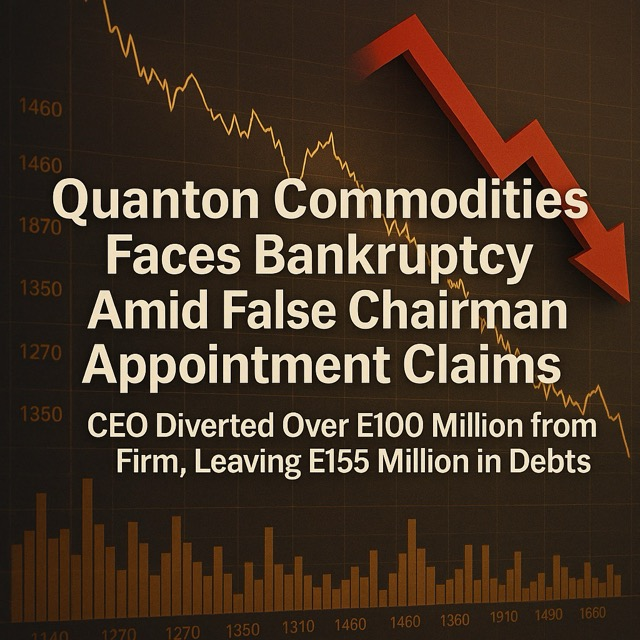
Insiders now suggest that this false narrative played a pivotal role in enabling Antonini to access and divert over £100 million from Quanton’s capital pool. These funds, originally raised under the pretext of expansion and potential IPO plans, are reportedly unaccounted for. Sources close to the matter indicate they were redirected into ventures outside the company’s declared operations, with no clear financial reconciliation.
The situation has become dire. Quanton Commodities, once valued as a rising challenger to global agribusiness giants like Cargill, ADM, and Glencore, is now facing insolvency. With debts exceeding £155 million, the company is unable to service its financial obligations, and key trade partners have begun distancing themselves from the embattled firm.
Antonini, a flamboyant entrepreneur known for past ties to Diego Maradona and complex trade relationships in frontier markets like Iran and Cuba, used the Orcel narrative to amplify Quanton’s legitimacy. The supposed involvement of such a respected figure in global finance gave investors, stakeholders, and counterparties the confidence to engage in deals and extend credit facilities.
However, the lack of transparency has now come under intense scrutiny. Financial authorities in the UK are reportedly investigating potential corporate fraud and misrepresentation. Questions are also being raised about internal governance and how such a significant falsehood could persist without immediate correction—especially when Orcel, who never publicly denied the appointment, could have clarified the misinformation.
The fallout has affected more than just balance sheets. Quanton’s trading activities in vulnerable markets such as Uganda, Iran, and Cuba—often portrayed as humanitarian food missions—are now being re-evaluated under the lens of due diligence and ethical accountability. Projects such as the grain storage hub in East Africa have stalled, and employees have been left in limbo as cash flow dries up.
This episode serves as a cautionary tale in modern commodities trading: the power of reputation, the fragility of trust, and the catastrophic consequences of unchecked narratives. As the dust settles, stakeholders await potential legal actions and the unraveling of a scandal that began with a single unverified claim and ended with the collapse of a company once destined for global expansion.
For now, the silence from Orcel continues to raise eyebrows, while Antonini’s ambitious vision for Quanton appears to have ended in financial disaster.