Beijing Beats Expectations in Q1, But Uncertainty Looms Over Trade and Stimulus Policy

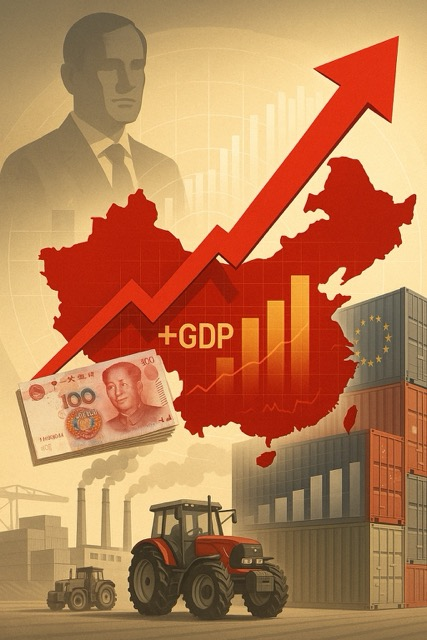
China’s economy opened 2025 with a surprisingly strong performance, recording a GDP growth of 5.4% in the first quarter, surpassing both internal expectations and analyst forecasts. This robust growth figure comes amid a turbulent global economic climate, most notably the resurgence of U.S.-China trade tensions, as former President Donald Trump pushes for a new wave of tariffs aimed at decoupling the two superpowers.
The data, released by China’s National Bureau of Statistics (NBS), mirrors the year-on-year growth recorded in the final quarter of 2024 and beats Beijing’s ambitious full-year growth target of 5%. Analysts had projected a more modest 5.1% growth, making the Q1 performance a notable economic achievement.
China’s deputy statistics commissioner, Sheng Laiyun, described the economy as having a “good start” but warned of headwinds ahead. “The current external environment is becoming increasingly complex and severe,” he stated, citing weak domestic demand and fragile foundations for long-term economic momentum. This cautious outlook underlines growing concerns that the first-quarter figures may not be sustainable.
Much of the growth appears to be driven by front-loaded exports, particularly to the U.S., as Chinese manufacturers rushed shipments ahead of the enforcement of additional tariffs. This strategy contributed to a short-term spike in industrial output and international trade performance but may create a “payback effect” in the coming quarters. Economists from Goldman Sachs have warned that sequential growth could “fall meaningfully” in Q2 due to the fading impact of export front-loading and escalating trade barriers.
Financial markets have reacted cautiously to the data. Hong Kong’s Hang Seng index dropped 2.5%, and the CSI 300 index on the mainland shed 0.9%. Meanwhile, the Chinese renminbi weakened slightly against the dollar, signaling investor skepticism about sustained momentum. These declines underscore the fragility of market sentiment despite headline growth.
To maintain momentum, the Chinese government has pledged further stimulus, including infrastructure spending and credit support, underpinned by a record-high central government budget deficit. While these measures are expected to bolster investment and consumption in the near term, questions remain about their effectiveness in an increasingly protectionist global landscape.
International financial institutions have revised their forecasts downward. Morgan Stanley cut its 2025 GDP projection from 4.5% to 4.2%, while UBS expects growth closer to 3.4%. Goldman Sachs forecasts 4%, highlighting growing consensus that structural challenges and geopolitical friction will weigh on China’s economy moving forward.
In summary, China’s Q1 growth provides a needed boost to Beijing’s ambitions, but it is far from a guarantee of stability. Trade tensions, internal demand weakness, and global monetary tightening could all act as brakes on the recovery. While China’s policymakers aim to stabilize growth with targeted interventions, the world’s second-largest economy still faces a bumpy road ahead.