Strategic Defense on Europe’s Southern Flank
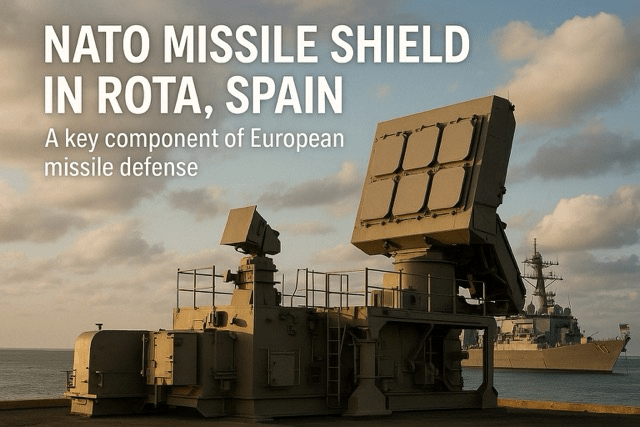
The NATO anti-missile shield, also known as the NATO Ballistic Missile Defense (BMD) system, represents a cornerstone in the alliance’s collective security strategy. One of its most strategic components is based in Rota, Spain, where the U.S. Navy maintains a forward-deployed naval force under NATO’s operational framework. The Naval Station Rota hosts four U.S. Aegis-equipped destroyers capable of intercepting ballistic missiles, forming a crucial part of the missile shield’s architecture.
Rota’s geographical location at the gateway of the Mediterranean Sea provides a vital strategic advantage. It allows for early detection, tracking, and engagement of potential missile threats originating from the Middle East or North Africa. The presence of these Aegis Ballistic Missile Defense (BMD) ships supports NATO’s deterrence posture and demonstrates transatlantic solidarity in confronting modern threats.
The Rota-based destroyers are equipped with the Aegis Combat System and the SM-3 interceptor missiles. These systems are designed to detect, track, and neutralize short to intermediate-range ballistic missiles during the midcourse phase of their flight. This capability adds a significant layer of defense for European member states and complements land-based Aegis Ashore sites in Poland and Romania.
Spain’s involvement in the missile shield also reflects its commitment to NATO’s collective defense principles under Article 5. Although the shield is defensive in nature, it has stirred geopolitical concerns, especially from Russia, which perceives it as a potential threat to its strategic deterrent. Despite reassurances from NATO that the system is not directed against Russia, the missile shield has become a point of contention in East-West relations.
Rota’s strategic importance has only grown in recent years. In response to emerging security challenges, discussions continue over expanding the naval presence in Rota. Plans have been proposed to increase the number of deployed destroyers and enhance the base’s infrastructure to support additional operations. Such developments would reinforce NATO’s southern defense architecture and signal the alliance’s readiness to adapt to a rapidly evolving threat environment.
In conclusion, the NATO missile defense presence in Rota is not just a technical deployment but a powerful symbol of international cooperation and strategic foresight. It underlines the commitment of NATO allies to shared defense responsibilities and serves as a linchpin in maintaining stability and security across the Euro-Atlantic region.




 The Tower Post