“Robots in Running Shoes”: China’s Ambitious Experiment in Robotics and AI

In a groundbreaking event, 21 humanoid robots competed alongside thousands of human runners in the Yizhuang half-marathon in Beijing on Saturday, marking the first time these machines have participated in a race alongside humans.
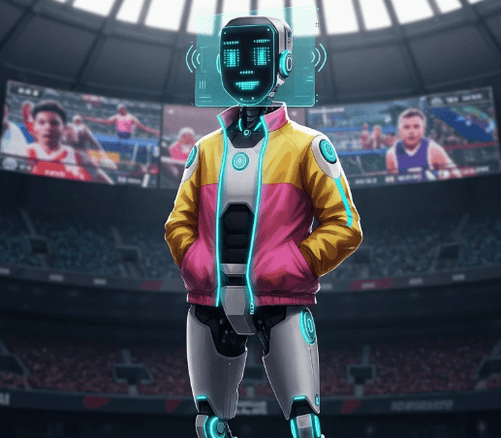
The robots, developed by Chinese manufacturers such as DroidVP and Noetix Robotics, came in various shapes and sizes, with some as short as 120cm and others reaching heights of 1.8m. One company boasted a robot with human-like features, capable of winking and smiling.
The robots were accompanied by human trainers, some of whom had to physically support the machines during the race. While some robots performed well, others struggled from the beginning, with one robot falling at the starting line and another crashing into a railing.
The winning robot, Tiangong Ultra, developed by the Beijing Innovation Centre of Human Robotics, completed the 21km course in 2 hours and 40 minutes. The men’s winner of the race had a time of 1 hour and 2 minutes.
The event was seen as a test of the robots’ capabilities, with Beijing officials describing it as more akin to a race car competition. The centre’s chief technology officer, Tang Jian, attributed Tiangong Ultra’s success to its long legs and algorithm that allowed it to imitate human running.
The event has sparked debate about the potential of humanoid robots in industrial applications. While China is investing heavily in frontier industries like robotics, some analysts question whether having robots participate in marathons is a reliable indicator of their industrial potential.
The Beijing Innovation Centre of Human Robotics is 43% owned by two state-owned enterprises, with tech giant Xiaomi’s robotics arm and leading Chinese humanoid robot firm UBTech holding equal shares. The centre’s achievements have been hailed as a major breakthrough in robotics, with Tang Jian claiming that no other robotics firms in the West have matched Tiangong’s sporting achievements.