As global powers race to digitize their militaries, cyber vulnerabilities—from fighter jets to satellites—are reshaping the rules of warfare in 2025.

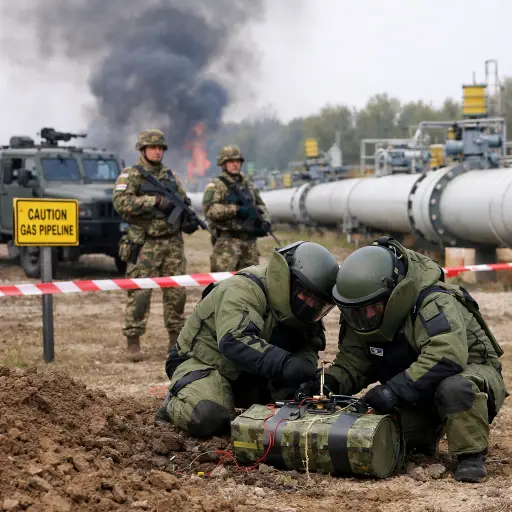
In the quiet countryside of the Czech Republic earlier this month, a NATO cyber defense exercise delivered a loud warning: in the digital age, a war could be lost before the first missile is launched.
From April 7 to 11, NATO conducted a simulation aimed at testing its Virtual Cyber Incident Support Capability. The scenario—a cyberattack on allied infrastructure—revealed just how quickly digital strikes could cripple military operations. Within hours, mock systems were paralyzed. The exercise confirmed what many defense officials already fear: cyberspace is now the front line of global conflict.
A New Battlefield
Military power in 2025 hinges not just on tanks and aircraft but on servers, software, and satellite links. As nations race to develop cyber capabilities, digital security has become as vital as air superiority or nuclear deterrence. The U.S., NATO allies, and geopolitical rivals like China and Russia are all investing billions into cyber arsenals that could tip the scales of future wars.
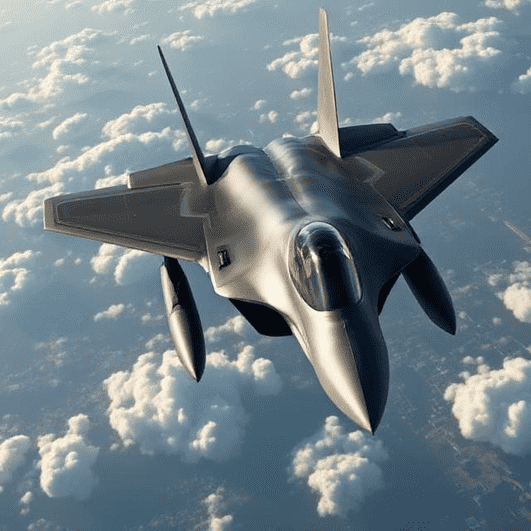
At the heart of this digital arms race is the Lockheed Martin F-35 Lightning II, a fifth-generation stealth fighter jet that embodies the fusion of airpower and cyber infrastructure. With over 1,000 units delivered globally, the F-35 relies heavily on data links and cloud-based logistics systems. Its Autonomic Logistics Information System (ALIS), for instance, streamlines maintenance via real-time data. But this reliance on connectivity also introduces dangerous vulnerabilities.
The F-35’s recent Block 4 upgrade supercharges its onboard computing with an Integrated Core Processor that handles up to 20 trillion operations per second. While this boosts performance, it also increases exposure to cyber intrusions. A successful breach could compromise stealth capabilities, corrupt battlefield data, or ground entire fleets.
The Global Cyber Chessboard
America’s airborne advantage faces growing scrutiny not just from technical vulnerabilities but from strategic comparisons. Russia’s Su-57 stealth fighter remains limited in scale, with fewer than 20 units operational. Meanwhile, China’s J-20 Mighty Dragon features tightly integrated—but insular—network systems that reduce hackability at the cost of alliance interoperability.
Satellites and drones represent other critical nodes in this digital defense network. The U.S. Space Force’s GPS III satellites, eight of which are currently active, offer enhanced navigation and jamming resistance. Built by Lockheed Martin, they deliver signals three times more accurate than previous models. However, these satellites rely on ground-based controls—prime targets for hostile cyber operations.
Similarly, the MQ-9 Reaper drone is a proven battlefield asset, capable of reconnaissance and lethal strikes. But its reliance on satellite command links opens it to spoofing attacks, a vulnerability already exploited by foreign actors in past conflicts. In contrast, Russia’s more rudimentary Orlan-10 drone trades digital sophistication for lower exposure, revealing a different calculus in cyber risk management.
The Rise of Hybrid War
The war in Ukraine offers a brutal case study in hybrid warfare. Russian forces have paired missile strikes with cyberattacks on critical infrastructure, a dual-pronged assault aimed at eroding morale and disrupting command systems. In response, NATO has stepped up cyber readiness, coordinating member states to fortify digital and physical defenses alike.
One focus: undersea internet cables. On January 20, NATO launched “Baltic Sentry,” a mission to protect submarine communications lines that carry 95% of the world’s internet traffic. The move followed warnings from telecom giants Vodafone, Orange, and Telefonica about possible sabotage. The stakes are high—cutting a single cable could disrupt military coordination, financial systems, and global intelligence sharing.
The World Economic Forum’s Global Cybersecurity Outlook 2025 points to a sharp rise in state-sponsored cyber espionage targeting such critical infrastructure, particularly telecommunications and undersea networks.
AI: The Double-Edged Sword
Artificial intelligence adds a dangerous new layer to this already complex landscape. In January, UK-based NATO contractor Goldilock warned that AI-powered malware capable of learning network patterns and evading detection could be a reality within two years. These programs could infiltrate defense systems and quietly feed false data to commanders—turning a strength into a liability.
At the same time, militaries are racing to use AI for defense. The U.S. Department of Defense has poured billions into initiatives like Project Maven, which applies machine learning to identify threats in real time. But this cat-and-mouse game—where both attackers and defenders leverage AI—has transformed cybersecurity into a relentless arms race.
A Human Bottleneck
Yet even the most advanced systems rely on people—and therein lies a critical bottleneck. The global shortage of cybersecurity professionals poses a serious challenge for militaries. The U.S. Department of Defense struggles to compete with private-sector salaries, which can top $300,000 for elite talent.
NATO allies face similar constraints. Bulgaria, for example, plans to build a cyber force by 2032, but its 2023 National Cybersecurity Strategy acknowledges a lack of skilled personnel. Even advanced nations like France and the UK report staffing gaps. The UK’s National Cyber Security Centre recently urged a shift to post-quantum cryptography—but adopting such technologies demands expertise that is in short supply.
Though NATO offers training through institutions like its Cyber Defence Academy in Portugal, progress is slow. The complexity of cyber threats is outpacing the speed of recruitment.
Quantum Threats on the Horizon
Quantum computing promises to revolutionize cybersecurity—and not always for the better. These machines can break current encryption methods in minutes, posing an existential threat to secure communications. The U.S. National Institute of Standards and Technology has published post-quantum cryptography standards and aims for widespread adoption by 2035.
Defense contractors like PQShield are rolling out new tools to meet that timeline. Meanwhile, countries such as Singapore are already testing space-based quantum encryption, with a satellite launch slated for this year. The urgency is clear: sensitive military data intercepted today could be decrypted tomorrow.
Fractures in Cyber Alliances
Geopolitics further complicates collective defense. A recent Kyiv Post report revealed a decline in U.S.-Ukrainian cyber cooperation, attributed to shifts in U.S. cyber leadership. As Poland and the Baltic states continue to face Russian threats, any lapse in allied coordination could be costly.
Efforts like the EU’s Permanent Structured Cooperation (PESCO) and NATO’s Integrated Cyber Defence Center, set to launch in 2028, aim to strengthen unity. But until then, initiatives like Bulgaria’s participation in Cyber Rapid Response Teams remain limited in scope.
Meanwhile, Russia and China are deepening cyber collaboration. Joint drills held earlier this year suggest a growing alignment of tactics and technologies between the two powers—a warning signal for the West.
The New War Doctrine
The growing scope of cyber warfare is not theoretical. Estonia’s crippling 2007 cyberattacks and the 2010 Stuxnet sabotage of Iran’s nuclear program were harbingers of today’s reality. The 2021 Colonial Pipeline ransomware attack showed how digital threats can paralyze civilian infrastructure. Militaries have taken note.
In 2016, NATO declared cyberspace an official domain of operations—on par with land, sea, air, and space. Today, the U.S. Cyber Command employs more than 6,000 personnel with an annual budget exceeding $10 billion.
These investments reflect a strategic shift: cyber defenses are no longer an afterthought—they are central to national security. Whether it’s the software inside the F-35, the satellites guiding drones, or the cables under the Baltic Sea, the next war may begin with a breach, not a bomb.
A Question of Readiness
For the average citizen, cyberwar may feel abstract. But the consequences—disrupted communications, grounded aircraft, or compromised military intelligence—would reverberate through daily life.
Can the U.S. and its allies build a digital fortress strong enough to withstand future attacks? That question will define not just military readiness, but the stability of the world order itself.
In this silent, invisible war, vigilance may be the only true defense.