An Analysis of Wage Disparities Across the European Union
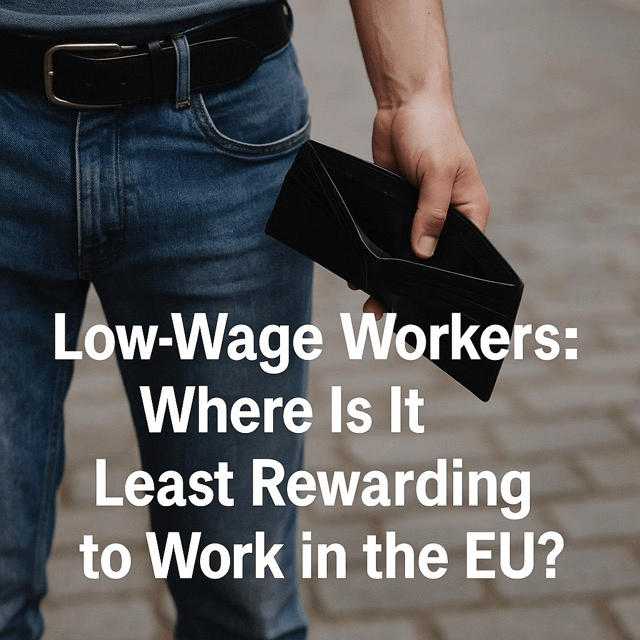
As the European Union continues to promote economic cohesion among its member states, stark disparities in wages and living standards remain a persistent challenge. A recent report by Eurostat and the European Trade Union Confederation highlights the troubling reality that in several EU countries, working full-time does not necessarily guarantee a decent standard of living.
Among the countries with the lowest average wages are Bulgaria, Romania, Hungary, and Latvia. In Bulgaria, for instance, the minimum monthly gross wage remains below €500, and even skilled workers in sectors like construction and manufacturing often earn less than €800 per month. This contrasts sharply with Western European economies such as Germany, France, or the Netherlands, where minimum wages exceed €1,600.
These wage gaps are not merely a matter of national income but reflect deeper issues related to labor market structures, productivity, and social protections. In countries where labor rights are weaker and union influence is limited, employers often exploit gaps in enforcement to maintain low wage levels. Many workers also face precarious contracts, lack of benefits, and limited opportunities for advancement.
The situation is especially dire for workers in rural and industrial regions, where unemployment remains high and job options are scarce. In Romania’s northeast and parts of eastern Hungary, for example, youth unemployment surpasses 20%, and many workers migrate to Western Europe in search of better pay and working conditions. This trend has caused labor shortages at home, further straining national economies.
In response, the European Union has launched initiatives such as the European Pillar of Social Rights and the Minimum Wage Directive to promote fair wages and reduce in-work poverty. However, implementation remains uneven, with some governments slow to adopt reforms or align with EU benchmarks.
Beyond minimum wage concerns, there are also disparities in average salaries between genders and sectors. Women in low-wage countries are disproportionately affected, often employed in care work or retail with limited legal protections. Similarly, migrant workers from non-EU countries face wage discrimination and barriers to social integration.
Experts warn that continued neglect of wage disparities could undermine EU unity and deepen socioeconomic divisions. “If we want a truly inclusive Europe, we must ensure that work pays everywhere,” said Esther Lynch, General Secretary of the European Trade Union Confederation. “No one should be working full-time and still living in poverty.”
In conclusion, while economic growth has returned to many parts of the EU, prosperity remains unevenly shared. Addressing wage inequality is not only a matter of fairness but essential to fostering a resilient, unified European labor market. For millions of workers in low-wage countries, real progress will only come when a full day’s work is met with a fair day’s pay.



 The Tower Post