Geopolitical Alliances Reshape the Future of the Iran Nuclear Deal

As diplomatic efforts to revive the Iran nuclear deal—formally known as the Joint Comprehensive Plan of Action (JCPOA)—continue to falter, Russia’s open support for Iran has added a new layer of complexity to already fragile negotiations. Once a cooperative participant in previous multilateral talks, Moscow is now playing a different game, one increasingly defined by strategic rivalry with the West.
Since the collapse of the 2015 nuclear agreement following the U.S. withdrawal under former President Trump, efforts to bring Iran back into compliance have seen limited progress. The Biden administration has pushed for a return to the deal, but Iran has demanded guarantees that the U.S. will not unilaterally exit again and that sanctions relief will be long-lasting.
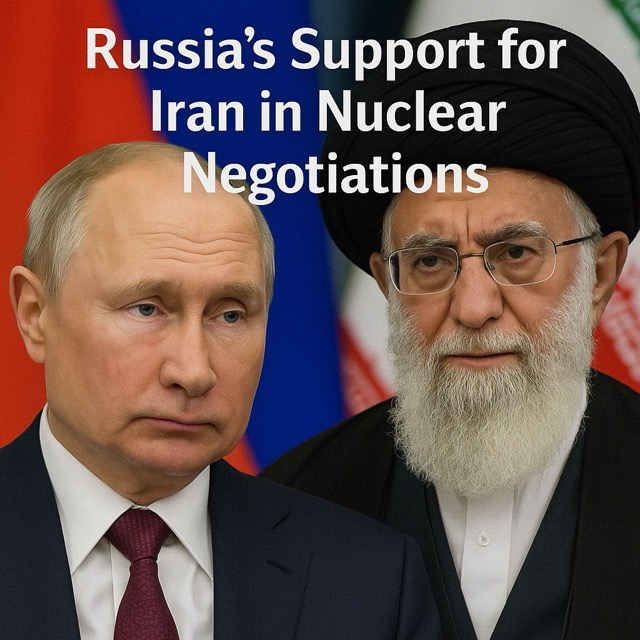
Russia, under President Vladimir Putin, has emerged as a vocal advocate for Iran’s positions, opposing what it describes as Western hypocrisy and one-sided pressure. Russian Foreign Minister Sergey Lavrov has met with Iranian officials multiple times in recent months, reinforcing Moscow’s position that Tehran’s right to peaceful nuclear energy must be respected. Russia also opposes any UN Security Council actions that may lead to further sanctions, effectively shielding Iran diplomatically.
Western officials are increasingly alarmed by growing military and technical cooperation between Russia and Iran, including reports of Iranian drone exports to Moscow for use in the war in Ukraine. In return, analysts believe Russia may be providing Iran with advanced missile technology and support for its nuclear infrastructure.
This emerging axis between Moscow and Tehran is challenging the traditional diplomatic process. Negotiations, once mediated by the EU with U.S. involvement from the sidelines, now feature more tension and fewer points of consensus. Russian diplomats have been accused of stalling talks or shifting the narrative toward a broader anti-Western coalition, making compromise more elusive.
Iran, for its part, sees its partnership with Russia as a way to resist Western economic and military pressure. Tehran has praised Moscow’s stance at the UN and in the International Atomic Energy Agency (IAEA), where Russia has consistently blocked resolutions criticizing Iran’s nuclear activities.
The international community remains divided. While the European Union continues to push for a negotiated solution, and China plays a balancing act between all sides, the U.S. finds itself increasingly isolated. With Russia and Iran consolidating their strategic alliance, the JCPOA’s future appears increasingly dim.
In conclusion, the support Russia offers to Iran in nuclear negotiations is not merely diplomatic—it represents a profound shift in geopolitical alliances. As Moscow deepens its engagement with Tehran, the prospect of a renewed nuclear deal fades further into the background, replaced by a new era of multipolar confrontation and regional instability.