Hungary and Slovakia Lean Toward Russia, While Poland and the Czech Republic Reinforce EU Unity
Introduction
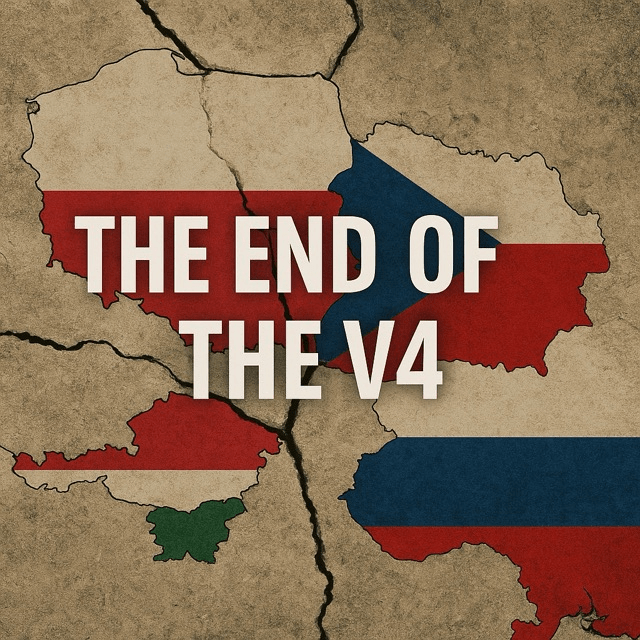
The Visegrád Group (V4), once a symbol of Central European cooperation and post-communist unity, is facing its effective demise. Established in 1991 to foster regional integration and EU accession, the alliance of Poland, Hungary, the Czech Republic, and Slovakia now stands fractured by diverging political paths and foreign policy agendas. In 2025, these differences have come to a head, dividing the bloc into two distinct camps: Hungary and Slovakia drifting toward pro-Russian policies, and Poland and the Czech Republic aligning more closely with EU values.
Hungary and Slovakia: Shifting Eastward
Hungarian Prime Minister Viktor Orbán’s government has long cultivated ties with the Kremlin, resisting EU efforts to sanction Russia and voicing skepticism toward NATO. In Slovakia, the return of Robert Fico to power has similarly reignited nationalist and anti-Western rhetoric. Both governments have criticized EU military aid to Ukraine and opposed further integration of defense and foreign policy within the bloc, calling instead for sovereign decision-making and neutral diplomacy.
Poland and the Czech Republic: Anchoring EU Solidarity
In contrast, Poland and the Czech Republic have intensified their support for Ukraine and actively participate in shaping EU and NATO strategic directions. Warsaw, under its new centrist leadership, has restored ties with Brussels and emphasized the need for a united stance against Russian aggression. Prague has positioned itself as a strong advocate of democratic governance and transatlantic cooperation. The two nations are increasingly seen as stabilizing forces within the EU and reliable partners in collective European security.
The Collapse of the Visegrád Mechanism
While economic cooperation among the V4 continues sporadically, the political alignment that once defined the group has disintegrated. Recent summits have been marked by diplomatic tensions, walkouts, and conflicting statements. The symbolic value of the Visegrád format has diminished, with EU officials acknowledging its loss of coherence and practical relevance. Analysts now refer to the V4 as a relic of a bygone era.
Implications for the European Union
The Visegrád breakup underscores broader shifts within the EU’s political landscape. Fragmentation among Central European states complicates EU decision-making on foreign policy and defense. At the same time, the closer alignment of Poland and the Czech Republic with EU core principles may strengthen Brussels’ capacity to act decisively on security issues. The divergence also highlights the challenge of balancing national sovereignty with collective responsibility in a rapidly changing geopolitical environment.
Conclusion
As the V4 dissolves into two contrasting trajectories, the European Union faces a new era of regional complexity. Hungary and Slovakia’s rapprochement with Russia raises concerns about unity and resilience, while Poland and the Czech Republic’s renewed pro-European orientation offers hope for stronger integration. The end of the Visegrád Group marks both the closing of a chapter and the beginning of a more fragmented but potentially adaptive European order.
This article is a synthesis of recent developments from EU briefings, policy papers, and regional media reports.

 The Tower Post