Reaffirming Britain’s Role in Advancing Economic Liberalism on the World Stage

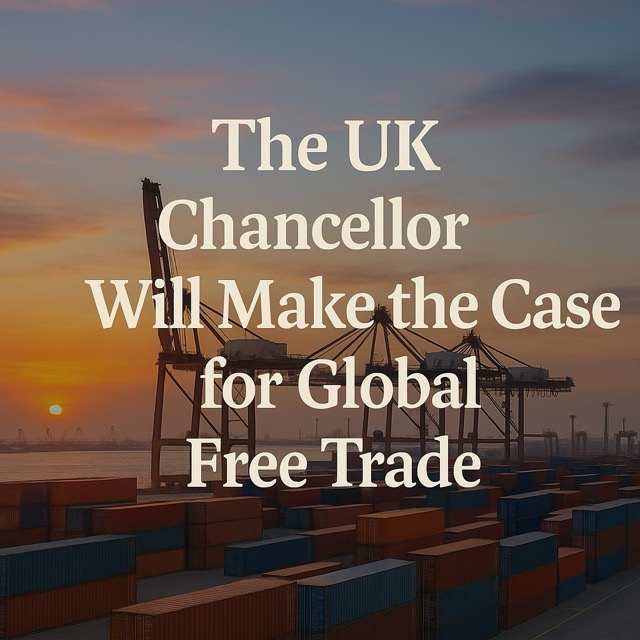
In a decisive address to the global economic community, the UK Chancellor of the Exchequer is expected to make a compelling case for the revival and expansion of global free trade. As geopolitical tensions and protectionist policies rise, the UK is positioning itself as a vocal advocate for open markets, innovation-driven economies, and multilateral cooperation.
The Chancellor’s remarks come at a pivotal moment in international economics. Trade wars, tariffs, and the restructuring of supply chains in response to COVID-19, Brexit, and the Ukraine conflict have reignited debates over the merits and challenges of global trade liberalization. Against this backdrop, the UK seeks to reinvigorate the principles of free trade that historically underpinned postwar economic growth.
In his speech at the World Economic Forum and during bilateral meetings with finance ministers, the Chancellor will highlight the benefits of reduced trade barriers, emphasizing the positive correlation between open trade and poverty reduction, technological exchange, and sustainable development. Britain, he will argue, stands ready to lead by example—negotiating modern free trade agreements (FTAs) that include robust environmental and labor protections.
One of the speech’s key messages is that globalization must evolve to reflect new realities: digital commerce, climate transition, and inclusive development. The Chancellor is expected to propose new frameworks that integrate digital trade protocols, enhance cross-border data flows, and support small and medium enterprises in accessing international markets.
The UK’s accession to the Comprehensive and Progressive Agreement for Trans-Pacific Partnership (CPTPP) will also be presented as a case study in modern trade engagement. The Chancellor will underline that Britain’s involvement in this Indo-Pacific alliance strengthens not only its economic resilience but also its strategic alignment with like-minded democracies.
While making his case, the Chancellor will also address criticisms of global free trade—acknowledging that globalization’s gains have not always been equally distributed. To that end, he will call for a ‘new social contract’ between governments and citizens, ensuring that trade benefits are shared through upskilling, education, and regional investment.
The Chancellor’s campaign is not without obstacles. Rising nationalism, political fragmentation, and growing skepticism about globalization present serious challenges. Nonetheless, the UK government views its leadership in trade policy as a vehicle for post-Brexit relevance and soft power projection.
Ultimately, the Chancellor’s message is one of optimism. Free trade, when modernized and regulated appropriately, remains one of the most powerful tools for peace, prosperity, and global cooperation. His address aims to galvanize partners to recommit to these ideals—at a time when the world needs them most.