Falling Energy Revenues Pose New Challenges for Moscow’s Economic Stability

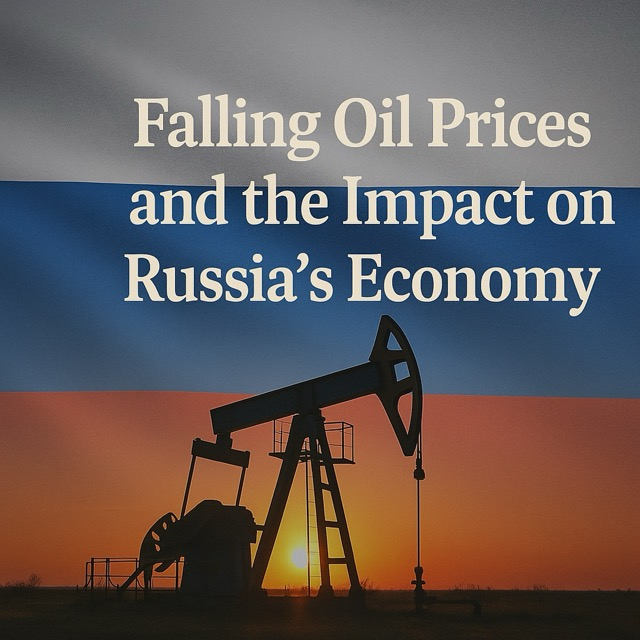
In recent months, global oil prices have experienced a notable decline, falling below $70 per barrel amid concerns over weakening demand, increased supply from non-OPEC countries, and a slowdown in the global economy. For oil-exporting nations, the drop in prices represents a significant economic disruption—but nowhere are the effects more consequential than in Russia.
As one of the world’s largest oil producers and exporters, Russia’s economy is heavily reliant on energy revenues, which make up over a third of its federal budget. The falling prices have severely impacted state income, leading to budgetary constraints, reduced spending capacity, and a sharp depreciation of the ruble. In response, the Russian Central Bank has revised its growth forecasts downward and is exploring emergency measures to stabilize the economy.
The impact is particularly severe in the context of Western sanctions imposed following Russia’s invasion of Ukraine. With access to Western capital markets restricted and foreign direct investment plummeting, Russia is increasingly dependent on energy sales to China, India, and other non-Western partners. However, even these markets are now demanding lower prices, further straining revenue streams.
Moscow’s fiscal strategy has been to rely on its National Wealth Fund to cushion the blow. Yet, analysts warn that continued withdrawals from the fund are unsustainable in the long term. Already, subsidies for energy companies, social spending, and military expenditures are being weighed against each other in a zero-sum game.
The ruble’s instability has led to inflationary pressures on imported goods, especially technology and foodstuffs, exacerbating the cost-of-living crisis in urban areas. Moreover, domestic consumer confidence has weakened, and small businesses are facing rising costs and reduced demand.
The Russian government has sought to downplay the crisis, attributing the oil price volatility to geopolitical manipulation by the West and speculators. Nonetheless, internal reports from the Finance Ministry suggest growing concern about long-term structural weaknesses in the economy and the need for diversification beyond fossil fuels.
Some sectors—such as agriculture, metals, and military exports—continue to perform relatively well. Yet they are insufficient to offset the decline in energy profits. Calls for economic reform, greater transparency, and investment in innovation have grown louder within Russia’s expert circles, though political constraints limit their practical implementation.
As the world transitions toward renewable energy and as geopolitical realignments continue, Russia’s economic future remains uncertain. The current oil price slump could either be a temporary shock or a sign of a deeper, more systemic challenge to its oil-dependent economic model. Either way, policymakers in Moscow face a complex and tightening fiscal puzzle.