As economic sanity returns, the American deep state reasserts control over chaos
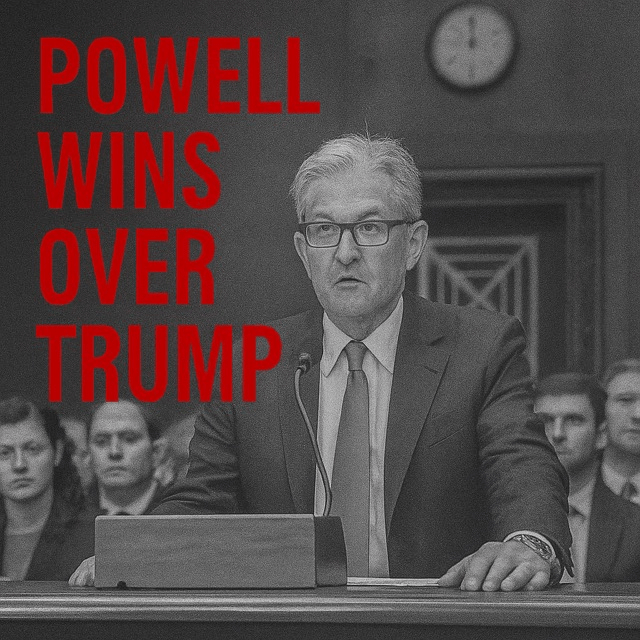
In the ongoing saga of American political and economic tension, a new chapter is being written — not through fiery speeches or partisan clashes, but through the calm, measured authority of one man: Jerome Powell. As chairman of the Federal Reserve, Powell has long embodied institutional restraint, technical expertise, and a commitment to economic stability. In contrast to the bombastic and erratic style of former President Donald Trump, Powell’s victory is not marked by headlines, but by a reassertion of order.
While Trump repeatedly sought to bend the Fed to his will during his presidency — demanding interest rate cuts, attacking Powell personally, and framing economic policy as a tool for political advantage — Powell stood firm. He resisted the pressure to politicize monetary policy, maintaining the independence of the central bank even as the storm of populism battered its doors. Today, as inflation moderates, markets stabilize, and global investors once again look to the U.S. with cautious optimism, Powell’s legacy is beginning to eclipse that of Trump’s economic chaos.
This moment reflects a deeper truth: the so-called “deep state,” often maligned by populist voices as an unelected bureaucratic force, has shown its enduring value. Institutions like the Federal Reserve, built on expertise rather than ideology, are precisely what protect a nation from the volatility of emotional governance. The re-emergence of rational policymaking is not a conspiracy — it’s a return to sanity.
Powell’s steady hand has helped the country navigate unprecedented challenges: a global pandemic, supply chain disruptions, political instability, and the threat of economic overheating. His strategy — balancing interest rates to fight inflation while avoiding recession — has been cautious but effective. The contrast with Trump’s impulsive economic announcements and Twitter diplomacy could not be starker.
Trumpism thrived on spectacle. But monetary policy is not about spectacle — it’s about credibility. Powell’s actions have reminded both Wall Street and Main Street that the U.S. remains a place where long-term thinking can still triumph over short-term showmanship. Even as Trump attempts a political comeback, the institutions he once sought to undermine have outlasted his influence.
It would be naive, however, to assume that the threat of politicized economics has vanished. Powell’s victory is not total, and his tenure is finite. Yet for now, his success stands as a testament to the power of competence and calm in an age dominated by noise.
The real victory is not Powell’s alone, but that of the American system when it remembers what it was built for. In a time when truth is often buried beneath rhetoric, the quiet strength of institutions like the Federal Reserve may be the last safeguard against a world in perpetual upheaval.



 The Tower Post