A quiet movement seeks to place an American Pope in the Vatican, shaking the foundations of global Catholicism

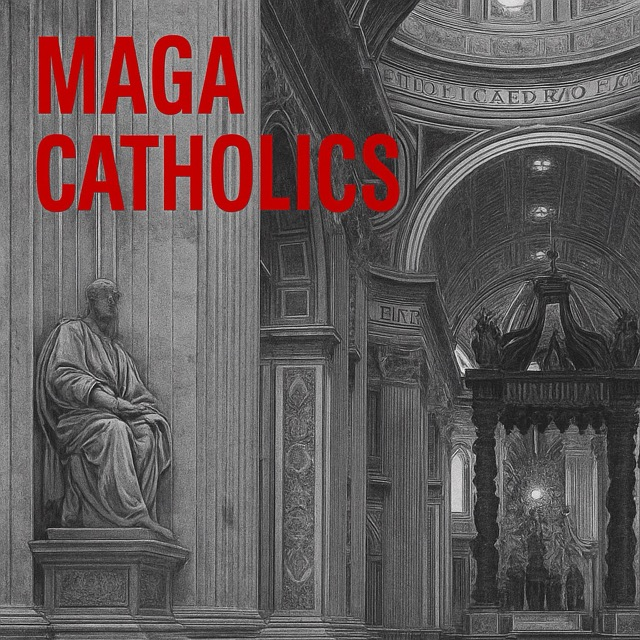
As the global Catholic Church navigates an era of deep political polarization and cultural upheaval, a bold and controversial ambition has emerged from within the conservative heartland of the United States: to place an American on the throne of Saint Peter. This effort, driven largely by right-wing American Catholics — sometimes referred to as “MAGA Catholics” — represents a significant challenge to the Vatican’s longstanding resistance to nationalist influences.
The term “MAGA Catholics” encapsulates a faction of American believers who blend traditional Catholic doctrine with the political ethos of Donald Trump’s populism. Fiercely pro-life, anti-globalist, and vocally critical of Pope Francis’s progressive agenda, this group sees the papacy not merely as a spiritual office but as a potential geopolitical lever. Their vision is not one of global unity, but of moral and doctrinal restoration — on their terms.
Behind the scenes, influential American donors and clerics are reported to be networking quietly, laying the groundwork for a future conclave that might favor a candidate sympathetic to their worldview. Catholic universities, think tanks, and media outlets in the U.S. have become rallying points for this movement, subtly elevating certain American cardinals and bishops as papabile — viable contenders for the papacy.
The Vatican, however, remains cautious. Pope Francis, despite his age and health concerns, has shown little intention of stepping aside. His appointments to the College of Cardinals have largely favored leaders from the Global South, thereby diminishing the numerical influence of North American voices. Yet that has not stopped the MAGA Catholic movement from dreaming bigger.
At the core of this movement is a profound dissatisfaction with the modern Church. MAGA Catholics reject the Pope’s emphasis on climate change, interfaith dialogue, and social justice as distractions from what they see as moral absolutes. For them, the Church’s future depends on reasserting authority, discipline, and tradition — and they believe only an American Pope can bring that about.
Critics argue that this ambition reflects a misunderstanding of the papal role. The Pope is not a political mascot but a spiritual father to a billion believers across diverse cultures and realities. The idea of politicizing the papacy along nationalist lines is not only theologically troubling but historically unprecedented.
Nonetheless, the energy and funding behind the American push are real, and Vatican insiders acknowledge a shift in tone and confidence among U.S. clergy. The next conclave, whenever it comes, may be more ideologically charged than any in modern history.
Whether this movement succeeds or not, it has already exposed deep fractures within the global Church — between North and South, between tradition and reform, between the universal and the partisan. In their quest for an American Pope, MAGA Catholics are not just seeking a new leader. They are challenging the very identity of the Catholic Church itself.