How Pope Francis’s vision of the Church challenged the cultural dominance of Western values — and why no one dares to say it
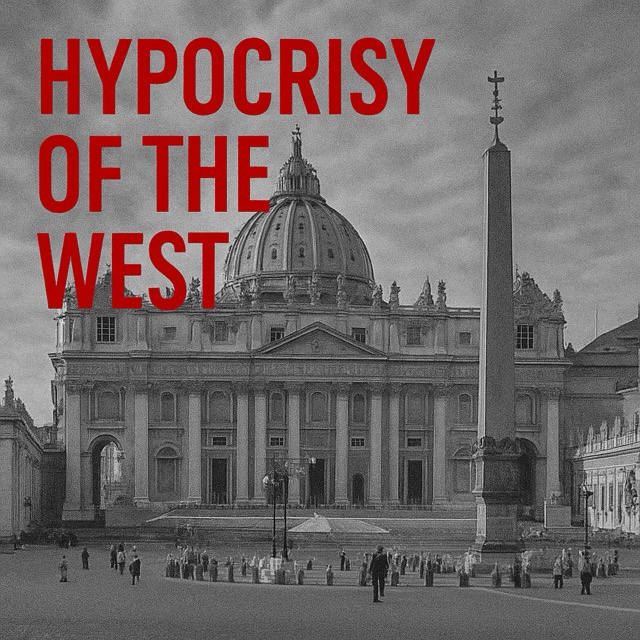
As the West grapples with cultural identity crises, economic instability, and moral uncertainty, a quiet but profound shift has taken place within one of its most ancient institutions: the Catholic Church. Under the leadership of Pope Francis, the papacy has undergone a transformation that many critics argue has subtly distanced the Church from its traditional alignment with Western civilization — and yet, few in the West are willing to speak openly about it.
Pope Francis, born Jorge Mario Bergoglio in Argentina, has often framed his pontificate as one of inclusivity, humility, and service to the poor. But beneath this outward posture, detractors claim a deeper agenda has taken shape — one that has deprioritized classical Western values such as individual liberty, national identity, and doctrinal clarity, in favor of a more globalist, relativist ethos.
Throughout his tenure, Francis has emphasized themes such as climate change, migration, economic inequality, and interreligious dialogue — all important issues, but ones that have often resonated more with secular progressive movements than with the Catholic faithful in the West. While his words have been praised by global elites, many traditional Catholics — especially in Europe and North America — feel increasingly alienated by a Church that no longer seems to defend what they consider to be the cornerstones of their civilization.
Critics argue that Francis’s approach marks not a broadening of the Church’s mission, but a redirection of it. In his effort to “decentralize” the Church, the Pope has elevated voices from the Global South, minimized the influence of Western clergy, and softened language on moral absolutes — especially on issues like family, sexuality, and religious exclusivity. For some, this is a long-overdue correction to Eurocentric dominance. For others, it feels like a dismantling of everything the West once stood for.
Yet despite these sweeping changes, the public conversation around Francis’s papacy remains largely sanitized. Western media outlets celebrate his “compassion” and “humility,” rarely addressing the growing tension within the Church or the political implications of his leadership. Few dare to question whether the Pope’s worldview is compatible with the heritage of Western Christendom.
Why the silence? Perhaps because to question Francis is to risk being labeled reactionary or intolerant. Perhaps because the institutions that shape Western discourse — universities, think tanks, and the press — are themselves undergoing a shift away from traditional values. But the silence is telling, and it betrays a deep discomfort in confronting a truth that many suspect but few will admit: that the papacy under Francis has been, in many ways, a challenge to the very foundation of Western identity.
This is not a call to reject Pope Francis or the universal Church. It is, however, an invitation to reckon with reality. The West’s inability to engage honestly with what this papacy represents is not just intellectual cowardice; it is a symptom of a broader moral confusion. And until this silence is broken, the gap between the Vatican and the West will only continue to grow — not in opposition, perhaps, but in mutual misunderstanding.

 The Tower Post