The former Credit Suisse CEO’s exclusion stirs controversy over political transparency and democracy in West Africa

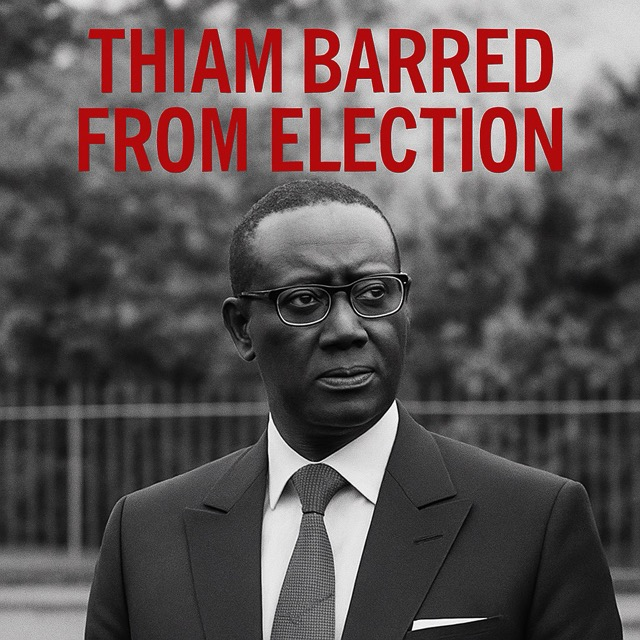
Tidjane Thiam, the globally respected former CEO of Credit Suisse, has been officially barred from participating in the upcoming presidential election in Côte d’Ivoire. Once considered a potential reformist force and a symbol of international credibility returning home, Thiam’s political ambitions have been abruptly curtailed by a decision that has ignited intense debate over the state of democracy in the West African nation.
The electoral commission cited administrative and eligibility issues for his removal — namely, residency requirements and alleged irregularities in his application process. Critics, however, see a more troubling motive: a calculated political maneuver to sideline a rising threat to the ruling establishment. Thiam’s growing popularity, bolstered by his success in global finance and his call for institutional reform, had positioned him as a formidable challenger.
Thiam, who returned to Côte d’Ivoire in 2023 after decades abroad, had been steadily building a political platform centered around economic modernization, anti-corruption, and youth empowerment. His message resonated particularly with the country’s educated middle class and diaspora communities. His exclusion, therefore, is not just a personal setback — it represents a disenfranchisement of a broader movement for change.
Supporters and observers alike are raising alarm bells. Regional democracy watchdogs and international organizations have questioned the timing and opacity of the commission’s ruling. With Côte d’Ivoire’s history of post-election unrest and political exclusion, many fear this decision could further polarize the nation ahead of a highly anticipated vote.
This is not the first time that Côte d’Ivoire’s electoral processes have come under scrutiny. The country has struggled to strike a balance between stability and competitive pluralism. For Thiam, whose career has been built on integrity and global engagement, the disqualification risks tarnishing not only his reputation but the country’s image on the world stage.
Some analysts suggest that the move may backfire. By removing a high-profile candidate, authorities have amplified his voice internationally and galvanized his base at home. Social media and diaspora platforms are already rallying under the banner of electoral fairness, demanding greater transparency and accountability.
Thiam, for his part, has urged calm but remains defiant. In a public statement, he emphasized his commitment to Ivorian democracy and vowed to continue working for national renewal, regardless of his official candidacy status. “This is bigger than me,” he declared. “It’s about the future of our nation.”
As the election approaches, the shadow of Thiam’s disqualification looms large. Whether intended or not, the message it sends is clear: in today’s Côte d’Ivoire, even global stature may not shield one from the complexities — and contradictions — of local power politics.