As two dairy giants consolidate, small producers fear for their future and fight to preserve independence

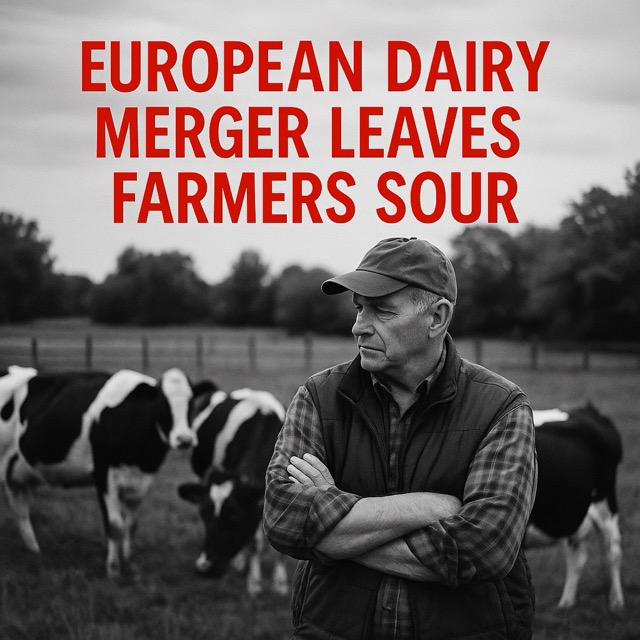
A recently approved merger between two of Europe’s largest dairy companies has sparked outrage among small and mid-sized farmers across the continent. While the corporate narrative celebrates increased efficiency and global competitiveness, many agricultural producers see the deal as a direct threat to their livelihoods, independence, and centuries-old farming traditions.
The merger — between Netherlands-based Milko Europe and French cooperative Lactalis Nord — creates the largest dairy conglomerate on the continent. Together, the two entities now control over 35% of Europe’s milk processing capacity and an even larger share of high-value dairy exports. Economists call it a strategic realignment; farmers call it a monopoly in the making.
For producers in France, Germany, Italy, and beyond, the deal represents yet another chapter in the ongoing erosion of bargaining power at the farm level. “This isn’t about scale anymore,” said one German dairy farmer. “This is about survival.”
With consolidation comes centralization, and many fear that local processing facilities will be closed in favor of mega-plants designed for maximum output at minimal cost. Already, whispers are circulating about closures in rural Brittany and Bavaria. For farmers whose lives revolve around short supply chains and personal relationships with processors, the implications are devastating.
There’s also the issue of pricing. With fewer players in the market, cooperative leverage diminishes. Independent farmers are likely to see lower margins as the mega-firm exerts greater control over contracts, collection routes, and payment terms. In regions where milk is already sold below cost, the merger threatens to drive producers out of business entirely.
Consumer groups, too, have raised concerns about transparency and food quality. Larger conglomerates often prioritize profit over sustainability or animal welfare, critics argue. And while branding may still evoke pastoral imagery, the reality behind the label may increasingly resemble industrial agriculture.
The European Commission approved the deal under competition law, citing global market pressures and the need for “European champions” in international trade. But for farmers, the decision highlights a growing disconnect between Brussels and the countryside. “We were promised a common agricultural policy that supports farmers,” one French producer lamented. “Instead, we got corporate consolidation and empty rhetoric.”
Farmer unions in several countries have already announced protests, with tractors expected to roll into capital cities in the coming weeks. Legal challenges are also underway, with cooperatives accusing regulators of failing to assess the long-term socio-economic impacts of the merger.
At stake is not just the structure of the dairy market, but the very future of rural Europe. For many farmers, the merger is not merely a business deal — it’s a signal that their way of life is no longer valued. And in the shadow of the largest dairy merger in European history, their fight for dignity, independence, and fair treatment has just begun.