The Dark Side of AI: How Data Centers Are Straining the Power Grid and the Environment

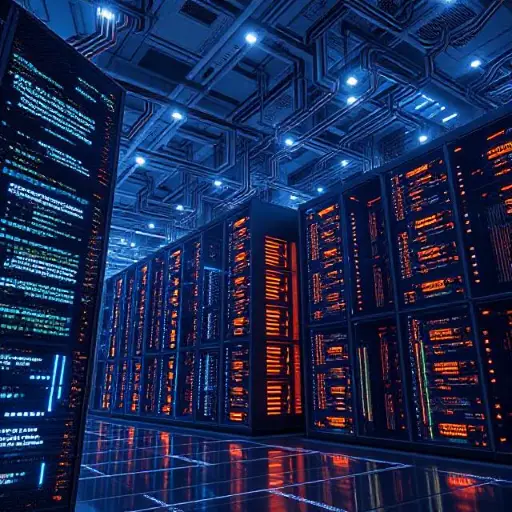
A recent study from researchers at Georgetown, Epoch AI, and Rand has painted a stark picture of the future of AI data centers. These massive facilities, which are crucial for training and running AI, may soon become power-hungry behemoths, straining the world’s electricity grid and pushing the boundaries of environmental sustainability.
According to the study, the growth trajectory of AI data centers around the world is nothing short of exponential. Between 2019 and 2025, the computational performance of these centers has more than doubled annually, while power requirements and capital expenditures have followed suit. The findings illustrate the daunting challenge of building the necessary infrastructure to support the development of AI technologies in the coming decade.
The study’s authors compiled a dataset of over 500 AI data center projects, revealing a stark reality. The hardware costs for these centers have increased by 1.9 times each year, while power needs have climbed 2 times annually over the same period. For instance, the xAI Colossus, a data center with a price tag of around $7 billion, draws an estimated 300 megawatts of power – as much as 250,000 households.
Despite efforts to improve energy efficiency, with one key metric increasing 1.34 times each year from 2019 to 2025, these improvements will not be enough to make up for growing power needs. By June 2030, the leading AI data center may have 2 million AI chips, cost $200 billion, and require 9 gigawatts of power – roughly the output of 9 nuclear reactors.
The implications are far-reaching. Data center energy intake is forecast to grow 20% by 2030, according to a recent Wells Fargo analysis, which could push renewable sources of power to their limits. This, in turn, may lead to an increase in non-renewable, environmentally damaging electricity sources like fossil fuels.
AI data centers also pose other environmental threats, including high water consumption and the erosion of state tax bases. A study by Good Jobs First estimates that at least 10 states lose over $100 million per year in tax revenue to data centers, the result of overly generous incentives.
While some hyperscalers, like AWS and Microsoft, have pulled back on data center projects in recent weeks, the industry’s fear of unsustainable expansion is palpable. As the world grapples with the challenges of AI data centers, one thing is clear: the future of these facilities will be shaped by the delicate balance between technological innovation and environmental sustainability.