Catch-Up” Mechanism Agreed, but Electrical Energy Debate Rages On

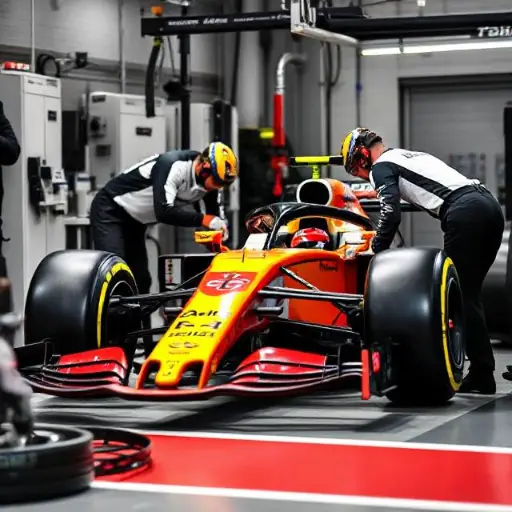
Formula 1 bosses have agreed in principle to a mechanism that would allow engine manufacturers to catch up if their performance falls short under the new rules set to take effect in 2026. However, a proposal to cut the amount of electrical energy permitted in races was met with no agreement, leaving the issue up for further discussion.
The new rules, which are scheduled to run from 2026 to 2030, aim to simplify the engine architecture while increasing the proportion of power supplied by the electrical part of the engine to about 50% from the current 20%. This change has raised concerns that it could lead to significant performance differences between manufacturers.
Mercedes, Honda, and Audi have expressed concerns that the increased hybrid aspect of the rules could create an uneven playing field, with Mercedes’ F1 boss Toto Wolff describing the plan to change the rules as “a joke.” The teams are worried that the new rules could lead to cars running out of electrical energy on certain circuits, forcing drivers to “lift-and-coast” on straights.
To address this issue, Red Bull has proposed reducing the permitted amount of electrical power deployment in races to 200kw (about 270bhp) from 350kw (470bhp). However, this idea has been met with opposition from Mercedes, who argue that there is no certainty that this will be a problem next year.
The FIA has stated that the F1 Commission will continue to discuss the energy management strategy for 2026, as well as measures to address financial issues that can be faced by power-unit manufacturers. Other changes discussed at the meeting included ways to minimize the risk of grass fires, such as those that led to a series of red flags during practice at the Japanese Grand Prix.
The FIA will continue to pursue research on the topic of replacing titanium skid blocks with steel at tracks where dry trackside grass could be a problem. The issue of engine performance rules will be discussed further at future meetings of the F1 power-unit manufacturers.
Key Points:
Formula 1 bosses have agreed in principle to a mechanism that would allow engine manufacturers to catch up if their performance falls short under the new rules.
A proposal to cut the amount of electrical energy permitted in races was met with no agreement.
Mercedes, Honda, and Audi have expressed concerns that the increased hybrid aspect of the rules could create an uneven playing field.
Red Bull has proposed reducing the permitted amount of electrical power deployment in races to 200kw (about 270bhp) from 350kw (470bhp).
The FIA will continue to discuss the energy management strategy for 2026 and measures to address financial issues faced by power-unit manufacturers.