Geopolitical Shockwaves as U.S. Policy Shift Alters Balance in Eastern Europe
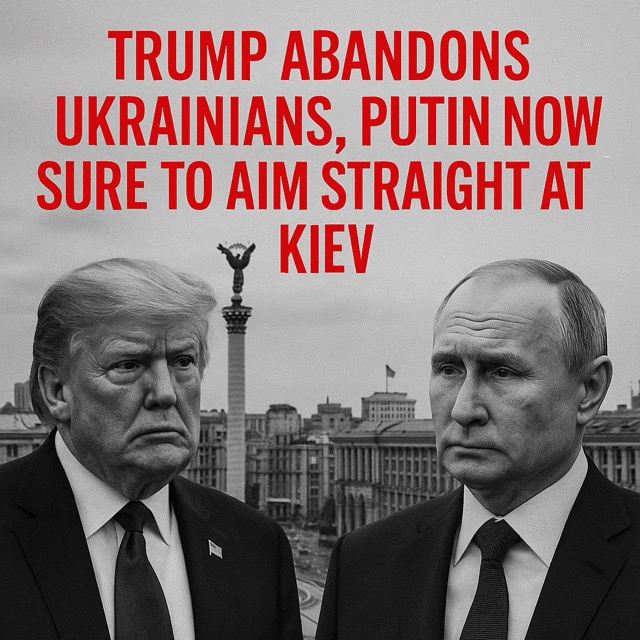
In a stunning turn of events, former U.S. President Donald Trump, widely expected to reclaim a strong foreign policy stance, has announced the withdrawal of U.S. support for Ukraine. This development, revealed in a press conference and later confirmed by senior Republican officials, has sent ripples across global diplomatic circles and raised alarms throughout Eastern Europe.
Trump’s announcement comes amid growing domestic pressure to shift focus inward and curtail international military commitments. “America needs to stop policing the world and start rebuilding at home,” Trump said during his address. While the decision has garnered support among isolationist factions, it has also triggered widespread criticism from U.S. allies and bipartisan concern in Washington.
Analysts suggest that the immediate consequence of this move could embolden the Kremlin. Within hours of Trump’s speech, Russian President Vladimir Putin reiterated Russia’s long-standing territorial claims, stating that “Kyiv remains the heart of historical Russia.” Russian troop movements along the eastern front have reportedly intensified, raising fears of a renewed offensive.
Military experts warn that a full-scale Russian push toward Kyiv is now more plausible than ever. The loss of American intelligence and military aid—previously crucial in countering Russia’s advances—may leave Ukraine vulnerable to overwhelming force. NATO, meanwhile, has convened emergency meetings to assess the fallout and consider a recalibration of its own strategic commitments.
Ukrainian President Volodymyr Zelensky addressed the nation with a somber tone, urging resilience and unity. “We will not be abandoned by history. Ukraine will stand—alone if necessary,” he declared. European Union leaders have since pledged to increase their support, though the scale and speed of their assistance remain uncertain.
Critics argue that Trump’s pivot may damage America’s global standing and embolden other authoritarian regimes. “This is not just about Ukraine. It’s about the global order,” said a senior NATO official who asked to remain anonymous.
The ramifications of this geopolitical shake-up are still unfolding. Key questions now loom: Will NATO fill the vacuum left by the U.S.? How will China respond to shifting allegiances in the West? And most critically, how will Ukraine defend itself in what could be a decisive moment in its modern history?
As Eastern Europe braces for what could be a turning point, global leaders are being tested in their resolve to uphold the principles of sovereignty, democracy, and international solidarity. The world watches as history unfolds in real-time—once again at the gates of Kyiv.
Note: This article is a hypothetical political analysis written in the context of evolving global affairs and should be interpreted as such.

 The Tower Post