Inside the Quiet Diplomacy of Germany’s Former Chancellor Amid Global Turbulence
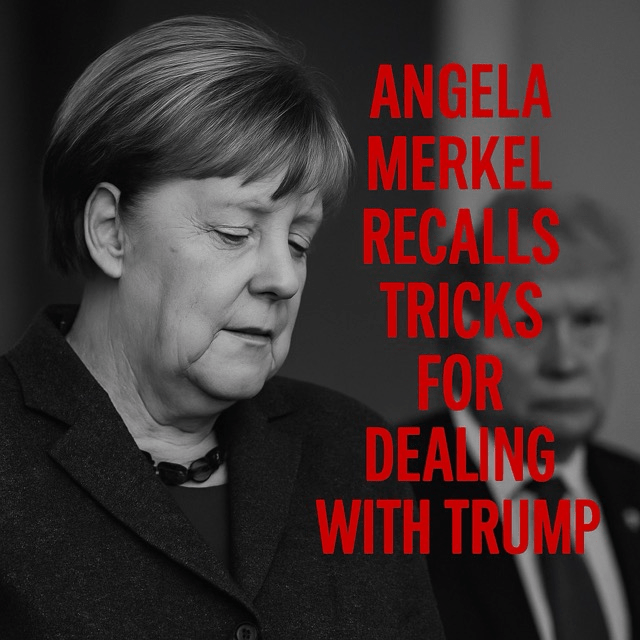
In a world accustomed to the chaos of Donald Trump’s political style, few global leaders had the fortitude and strategic subtlety to engage with him effectively. Among those few was Angela Merkel, Germany’s long-serving chancellor, whose calm pragmatism and intellectual discipline stood in stark contrast to Trump’s volatility. Now out of office, Merkel has begun to share candid recollections of her diplomatic balancing act with the former U.S. President — revealing a quiet brilliance in navigat…
Merkel has described her strategy as a mix of psychological resilience and deliberate understatement. While Trump thrived on provocation and dominance, Merkel often diffused tension by refusing to react emotionally. According to insiders and Merkel herself, she learned early on that Trump was more responsive to personal flattery and visible strength than traditional diplomacy. “It wasn’t about overpowering him,” Merkel once reflected, “but about understanding what mattered to him and reframing the …
Her tactics were subtle. She would often cite data and facts — not to challenge Trump directly, but to lead him toward conclusions she wanted him to reach. She also maintained what German officials referred to as the “strategic pause”: giving Trump space to speak, waiting for emotional energy to subside, then steering the conversation to pragmatic outcomes.
Merkel’s background as a physicist informed her calculated patience. She treated their interactions almost like a scientific process: hypothesis, observation, and adjustment. In contrast to more confrontational leaders, she rarely clashed openly with Trump, but she was firm in private, particularly on issues like NATO spending and climate change.
Perhaps one of her most remarkable diplomatic maneuvers came during the 2018 G7 summit in Canada. In the now-iconic photograph of Merkel leaning over a table toward a seated Trump, she embodied a unique blend of strength and resolve. Behind that image was a complex choreography of persuasion, in which Merkel sought to salvage transatlantic consensus amid Trump’s isolationist stances.
In post-office interviews, Merkel has been careful not to criticize Trump harshly — consistent with her diplomatic restraint. Yet her recollections offer more than anecdotes; they reveal a method of leadership rooted in empathy, strategic silence, and intellectual rigor. While others attempted to mirror Trump’s aggression, Merkel’s approach was to disarm it.
Her experience holds lessons for current and future leaders dealing with populist or unpredictable figures. Merkel’s “tricks” were not manipulation, but grounded in emotional intelligence and a deep understanding of personality politics. Her quiet triumphs, often overlooked in the heat of global headlines, may well serve as a blueprint for diplomacy in an increasingly fractured world.
 The Tower Post