Smaller is Better”: The Industry’s Worrying Trajectory Away from Inclusivity
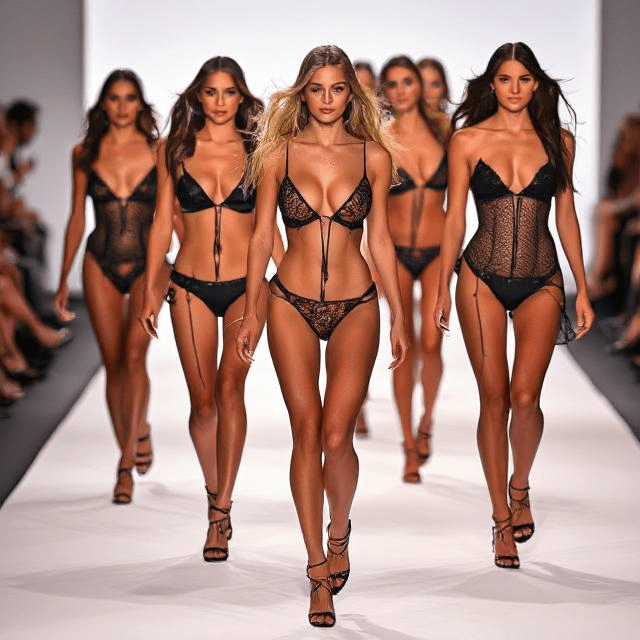
The fashion industry’s pursuit of inclusivity has taken a concerning turn. According to a recent report by Vogue Business, less than 1% of models on the runways of recent Autumn/Winter 2025 shows were plus-sized. This marks a significant drop from last season, where plus-sized models made up 0.8% of the total and mid-sized models accounted for 4.3%.
The average Australian woman wears a size 14-16, yet the industry’s focus on ultra-thin models sends a damaging message. “It tells me there’s such a disconnect,” says Australian content creator Shauna Ryan. “The people who make decisions about marketing know that there has to be diversity, but then the people who are creating the designs for these brands don’t really make those allowances.”
The trend is not limited to the runways. Social media platforms like TikTok and Instagram have become breeding grounds for body shaming and fatphobia. Influencers have been using AI filters to mock fat people, while fashion brands have been accused of perpetuating the “smaller is better” narrative.
The resurgence of the ultra-thin trend has been linked to the approval of semaglutide, a weight loss medication commonly known as Ozempic. The drug has been criticized for its potential to fuel eating disorders and body dissatisfaction. “It’s a drug that has created a skinnier industry and a new trend that skinnier and skinnier is better,” says Hillary Taymour, founder of Collina Strada.
The impact of this trend is being felt by those who are already vulnerable to body image issues. Clinical psychologist Sarah Cox, who manages the Butterfly Foundation’s national Helpline, says that social media is increasingly a concern for those experiencing body dissatisfaction. “Social media doesn’t lead to eating disorders alone, but there’s definitely a lot of quite harmful content that’s on it,” she says.
The fashion industry’s failure to promote inclusivity is not only damaging to individuals but also perpetuates a culture of exclusivity. As Shauna Ryan notes, “Fashion is fashion, but when people start to internalise it and devalue their own existence based on what they see, it’s so harmful.”
Key Statistics:
Less than 1% of models on the runways of recent Autumn/Winter 2025 shows were plus-sized.
The average Australian woman wears a size 14-16.
Mid-sized models made up 4.3% of the total last season.
Over 4.1 million Australians over 15 have been significantly affected by body dissatisfaction over the past 12 months.
Those with an eating disorder are estimated to be over 1.1 million.
Quotes:
“The people who make decisions about marketing know that there has to be diversity, but then the people who are creating the designs for



 The Tower Post