How Internal Divisions and Strategic Missteps Are Sinking Italy’s Left
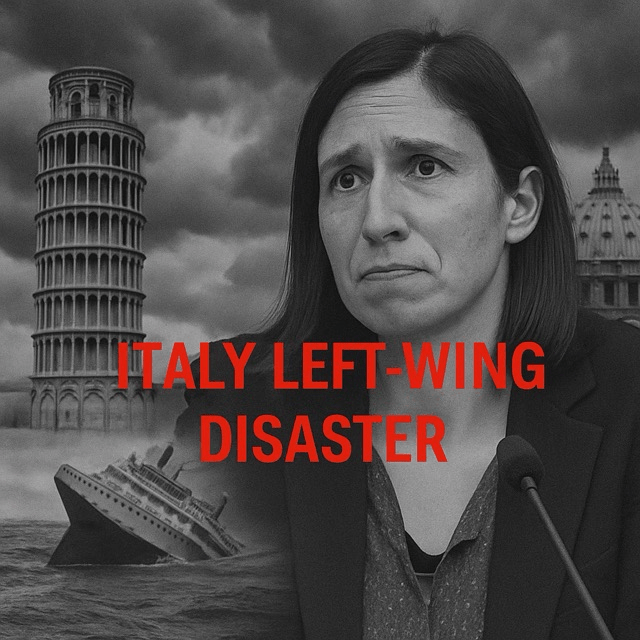
Italy’s political left is facing one of its most critical crises in recent memory. Under the leadership of Elly Schlein, the center-left Democratic Party (Partito Democratico – PD) and its broader left-wing allies are struggling to maintain relevance, unity, and voter confidence. Schlein, once hailed as a fresh and progressive voice capable of rejuvenating the left, is now at the center of growing controversy, with many blaming her for exacerbating divisions and accelerating the decline of left-wing politics in Italy.
When Schlein assumed leadership, there was a surge of optimism. Young, dynamic, and internationally minded, she was seen as a leader who could bridge traditional divides and revitalize the party’s base. However, her tenure has been marked by strategic miscalculations, unclear messaging, and an inability to consolidate support across the party’s diverse factions.
Many observers argue that Schlein has alienated moderate voters while failing to galvanize the more radical elements of the left. Her emphasis on progressive social issues, while resonant with a segment of younger voters, has not translated into broader electoral success. Meanwhile, traditional concerns like labor rights, economic reforms, and public services—long the bedrock of leftist support—have been perceived as neglected.
The fragmentation of the broader left-wing alliance has further weakened the movement. Smaller parties, once seen as potential coalition partners, are distancing themselves from the PD, either drifting toward centrist alliances or operating independently. In regional and local elections, this disunity has translated into significant losses, with conservative and right-wing parties consolidating their grip on power.
Critics within the PD accuse Schlein of centralizing decision-making and sidelining experienced figures, creating an atmosphere of distrust and resentment. Without a coherent strategy to address internal dissent and voter disillusionment, the party’s prospects for future national elections look increasingly bleak.
Supporters argue that Schlein is a scapegoat for deeper, structural problems within Italy’s left, which has struggled for decades to adapt to changing social and economic realities. They point to a need for long-term cultural and political renewal, not just leadership changes, to restore the left’s credibility and relevance.
Nevertheless, the current situation is dire. Unless urgent and profound changes are made, Italy’s left risks becoming a marginal force in the national political landscape, ceding ground to a right-wing coalition that shows no signs of weakening.
In conclusion, the crisis engulfing Italy’s left highlights the challenges of modern political leadership. Elly Schlein’s bold vision has, so far, fallen short of the unity and momentum needed to turn the tide. Whether the left can recover from this disaster remains an open and pressing question for Italy’s democracy.




 The Tower Post