The Dark Legacy of London 2012: Uncovering the Web of Doping Scandals that Tainted the Women’s 1500m Final
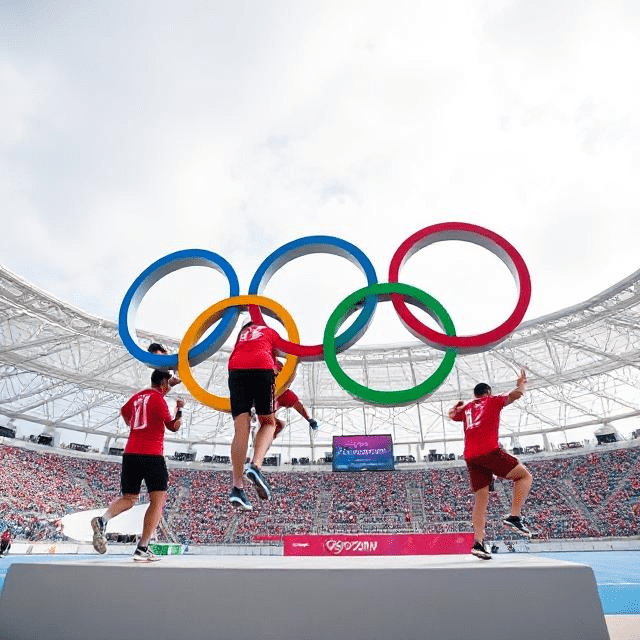
The women’s 1500m final at the 2012 London Olympics was supposed to be a moment of triumph for British athlete Lisa Dobriskey. Instead, it was a day that would leave her feeling cheated, frustrated, and ultimately vindicated.
Dobriskey, a former Team GB athlete who had won Commonwealth gold and world championship silver, had battled her way into the final after a year marred by injuries and setbacks. But as she stood in the tunnel before the race, waiting to enter the stadium, she felt a sense of unease.
“It was terrifying,” Dobriskey recalls. “People were yelling, people were screaming, it was overwhelming.”
The crowd’s hysteria only added to Dobriskey’s anxiety, and she struggled to keep up with the pack. She crossed the line in 10th place, almost three seconds off the pace, and was left feeling bitterly disappointed and embarrassed.
But Dobriskey’s concerns went beyond her own performance. She had been suspicious of her rivals’ abilities, particularly Turkish athlete Asli Cakir Alptekin, who had won gold after leading from the front for the last 300m. Dobriskey had privately contacted the International Association of Athletics Federations (IAAF) to express her concerns about doping, and she wasn’t alone.
The Web of Deception
In the months and years that followed, a web of deceit was slowly unraveled. Cakir Alptekin was suspended in 2013 after abnormalities were detected in her blood profile dating back to 2010. She was given an eight-year ban in 2015 and forfeited all her results from 2010 onwards, including her Olympic gold.
But Cakir Alptekin was not the only athlete involved in the scandal. Gamze Bulut, the Turkish runner who had taken silver, was also banned for blood passport abnormalities in 2017. Her results were annulled back to 2011, and she was stripped of her Olympic medal.
And it wasn’t just the Turkish athletes who were involved. Natallia Kareiva of Belarus and Yekaterina Kostetskaya of Russia were also suspended for ABP abnormalities, and their results were wiped from the Olympic record.
The fallout from the scandal was devastating for Dobriskey. She was criticized for speaking out about her suspicions, and she was left feeling like she had been cheated out of a medal.
“I just had to detach myself from the sport,” Dobriskey says. “Watching it now makes me feel like I didn’t do enough, I wasn’t good enough. Should I have trained harder? Should I have done better?”
But Dobriskey’s concerns were eventually vindicated. In 2017, Tatyana Tomashova of Russia was given a 10-year ban for using anabolic steroids, detected in retests of stored samples from 2012. Her results were retrospectively wiped, and the revised results showed that the original bronze medallist, Maryam Yusuf Jamal of Bahrain, was the new Olympic champion.
A Legacy of Shame
The legacy of the 2012 London Olympics is one of shame and deceit. The women’s 1500m final was a day that will be remembered for years to come, not as a moment of triumph, but as a reminder of the dark underbelly of professional sports.
As Dobriskey looks back on that day, she is left with a sense of sadness and frustration. She was cheated out of a medal, but more importantly, she was cheated out of a fair chance to compete.
“I wasn’t on a level playing field,” Dobriskey says. “I wasn’t competing against athletes who were clean.”



 The Tower Post