A Strategic Power Balancing Regional Influence and Global Ambitions

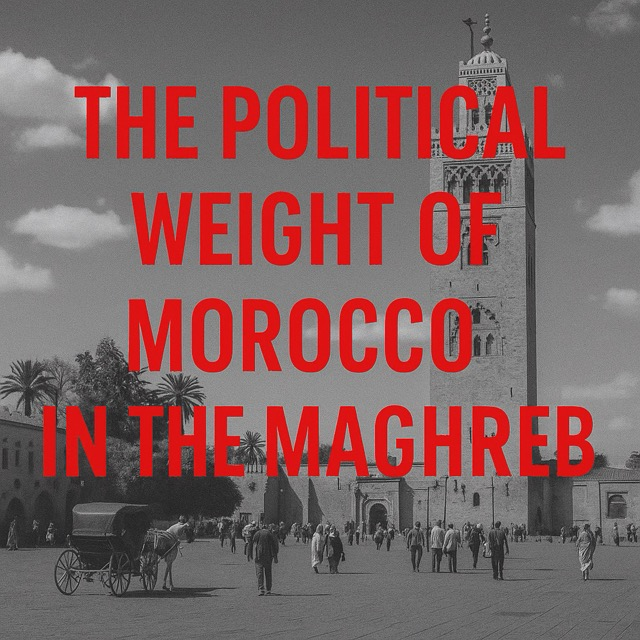
Morocco, located at the crossroads of Europe, Africa, and the Arab world, has long played a unique and increasingly influential role in the Maghreb region. Unlike its neighbors—Algeria, Tunisia, Libya, and Mauritania—Morocco has positioned itself as a politically stable, diplomatically agile, and economically dynamic actor in North Africa. This status has allowed it to exert significant political weight in the Maghreb, both through bilateral relations and multilateral platforms.
One of Morocco’s key strengths lies in its political stability. Since gaining independence in 1956, the country has managed to avoid the large-scale political upheaval and civil conflict that have destabilized parts of the region. The monarchy, under King Mohammed VI, has implemented gradual reforms that have preserved continuity while projecting an image of modernization and moderation. This political stability has earned Morocco credibility with both Western allies and African partners.
Economically, Morocco has developed a diversified market, investing heavily in infrastructure, renewable energy, tourism, and industry. The Tanger-Med port complex, solar energy projects in Ouarzazate, and the expansion of the automotive and aerospace sectors have boosted Morocco’s regional economic profile. These advancements have not only strengthened its domestic economy but have also increased its attractiveness as a hub for trade and investment in the Maghreb and beyond.
On the diplomatic front, Morocco has been assertive and strategic. Its return to the African Union in 2017 marked a turning point in regional engagement, accompanied by a diplomatic push across West and Sub-Saharan Africa. At the same time, Rabat has maintained close relations with Western powers, particularly France, Spain, and the United States. This unique positioning allows Morocco to act as a bridge between continents and cultures, amplifying its political influence.
However, Morocco’s role in the Maghreb is not without controversy. Tensions with Algeria remain a central geopolitical challenge, particularly over the issue of Western Sahara. Algeria supports the Polisario Front, which seeks independence for the territory, while Morocco maintains that Western Sahara is an integral part of the kingdom. This dispute has effectively frozen Maghreb regional cooperation and paralyzed the Arab Maghreb Union.
Despite this, Morocco continues to lead in soft power diplomacy. It invests in religious diplomacy through the training of imams from across Africa, promotes cultural initiatives, and serves as a model of moderate Islam. These efforts are part of a broader strategy to project influence through non-coercive means, contrasting with Algeria’s more security-centric approach.
Morocco’s ability to engage with both regional partners and global powers gives it a significant advantage in shaping the future of the Maghreb. As the region grapples with economic challenges, youth unemployment, migration pressures, and geopolitical rivalries, Morocco’s relative stability and proactive diplomacy position it as a pivotal player.
In conclusion, Morocco’s political weight in the Maghreb is not merely the result of geography—it is the product of strategic leadership, diversified diplomacy, and an ability to adapt to shifting regional dynamics. As the balance of power in North Africa evolves, Morocco is poised to play a leading role, shaping the region’s political and economic trajectory for years to come.