A reflection on the silent massacre of workplace fatalities

When we think of mass death, war is the first word that comes to mind. Its brutal visibility, with ruined cities and grieving families, dominates headlines. Yet, there is another form of death—silent, persistent, and normalized—that occurs every day around the world: death at work.
According to the International Labour Organization (ILO), every year approximately 2.78 million people die from work-related accidents or diseases. That equates to over 7,600 deaths every single day. While war tends to shock and mobilize, workplace deaths often remain invisible, buried in bureaucratic reports or reduced to mere statistics.
In Europe, more than 3,000 people die each year from occupational accidents, with Italy reporting an alarming number of over 1,000 annual deaths. Many of these fatalities are preventable and occur in industries with poor safety regulations, inadequate training, or outright negligence. The construction sector, agriculture, and heavy manufacturing are especially affected.
In developing countries, the toll is even higher. The lack of enforcement, weak labor protections, and economic pressures force millions to work in dangerous conditions. For example, in South Asia, garment factory collapses and mining accidents have claimed hundreds of lives in a single incident.
The normalization of workplace deaths reflects a deeper societal issue—an economy that often values productivity over human life. When employers cut corners to save costs, and authorities fail to enforce safety laws, workers pay the ultimate price.
Much like war, workplace fatalities tear families apart, create long-lasting psychological trauma, and result in significant economic costs. But unlike war, they rarely provoke outrage or sustained media attention. There are no peace treaties for workers, no ceasefires, only the daily grind that for some ends in tragedy.
The fight for safer workplaces must be as urgent and visible as anti-war activism. Governments, employers, and societies must acknowledge that a job should never be a death sentence. Enhanced regulations, whistleblower protections, and investment in worker education are vital steps toward ending this silent war.
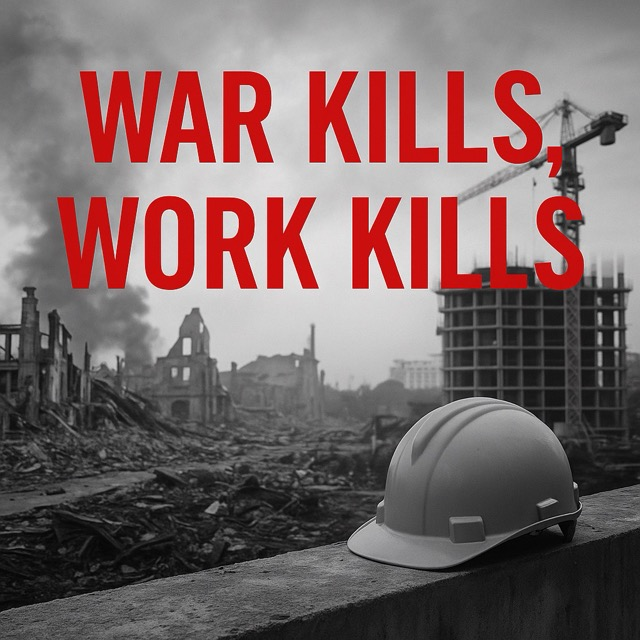
War kills suddenly. Work kills quietly. Both deserve our fullest attention.