Elon Musk’s ambitious new venture aims to reshape AI with a focus on truth, control, and integration
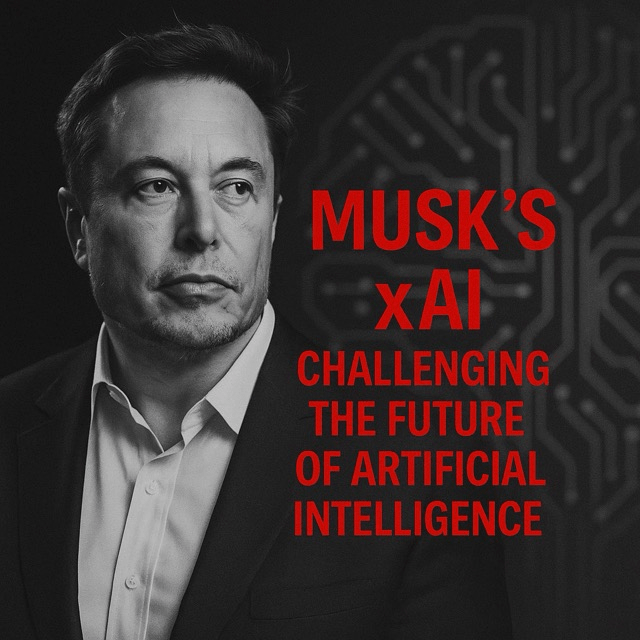
Elon Musk has once again made headlines with the launch of xAI, a bold new artificial intelligence company that positions itself as an alternative to the current industry giants. With a mission “to understand the true nature of the universe,” xAI enters the rapidly evolving AI sector with high expectations and equally high stakes.
Musk, no stranger to ambitious ventures, co-founded OpenAI but parted ways with the organization years ago. With xAI, he aims to return to the core principles of alignment, transparency, and safety that he believes are being overlooked in the race for commercial dominance in AI. The company has already begun recruiting top-tier talent from DeepMind, OpenAI, Tesla, and other leading tech firms, creating a formidable team with the capability to innovate at scale.
At the heart of xAI is the belief that artificial general intelligence (AGI) must be developed carefully and ethically. Musk has long voiced concerns about the existential risks of unaligned AI, emphasizing that intelligence developed without a deep understanding of human values could lead to catastrophic outcomes. xAI, therefore, is not only a technological project but also a philosophical one, seeking to embed principles of truth-seeking and human-centric design into its models.
Unlike other AI firms, xAI operates closely with Musk’s other companies, especially Tesla and Twitter (now X). There are hints that xAI’s models could soon power autonomous driving systems, enhance customer interactions on social media platforms, or even be integrated into spacefaring technologies via SpaceX. This interconnected ecosystem gives xAI a unique advantage: a real-world testing environment for AI applications across automotive, digital communication, and aerospace.
Critics, however, are skeptical of the company’s lofty ideals and its founder’s controversial public persona. Some worry that xAI could become a vehicle for consolidating more power under Musk’s growing tech empire. Others question whether an AI model shaped by a singular worldview can truly reflect pluralistic values.
Nonetheless, the momentum is undeniable. xAI has already released a conversational model, Grok, designed to compete with ChatGPT and other generative AI platforms. Early testers describe Grok as irreverent, fast, and opinionated—traits that reflect Musk’s own online persona. Whether this approach will appeal to mainstream users or remain a niche curiosity remains to be seen.
In the coming years, xAI will have to prove that it can balance Musk’s vision with responsible AI development. As global regulators move to define the rules of AI deployment, xAI’s actions could either serve as a model of aligned intelligence or a cautionary tale about unchecked ambition.
Whatever the outcome, one thing is clear: with xAI, Elon Musk is once again betting big on the future—this time, on a future that may be shaped as much by machines as by men.




 The Tower Post