The Oracle of Omaha Steps Back Amid Global Shifts in Capitalism and Market Intervention
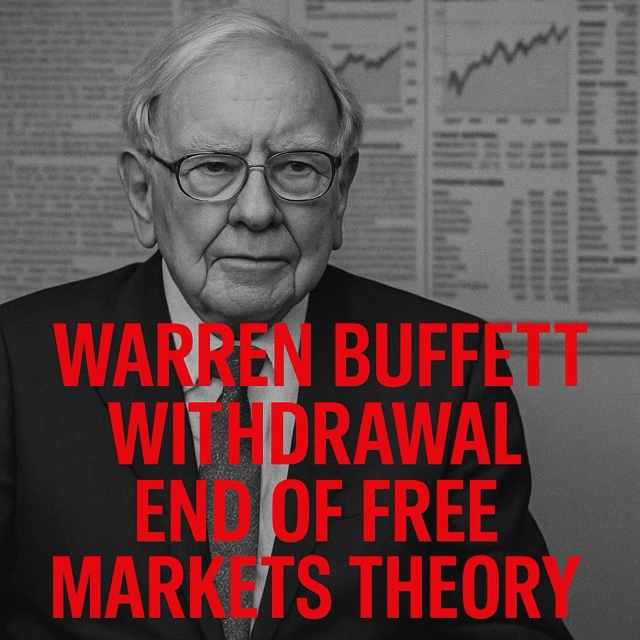
Warren Buffett, widely regarded as one of the most successful investors in history, has long been a stalwart defender of free-market capitalism. His departure from active leadership in Berkshire Hathaway has ignited a wider conversation about the state of global markets—and whether the principles he championed are losing relevance in a world increasingly shaped by government intervention, geopolitical tensions, and technological disruption.
The 93-year-old “Oracle of Omaha” announced a phased withdrawal from key roles at Berkshire Hathaway, prompting analysts and commentators to question whether his retreat signals not just a generational handover, but the twilight of a market philosophy rooted in patient capital, intrinsic value, and minimal interference. In recent years, Buffett’s cautious stance on speculative assets, cryptocurrency, and unprofitable tech startups has contrasted sharply with market trends dominated by hype, speed, and liqui…
One of the clearest indicators of this ideological shift has been the erosion of the idea that markets should self-regulate. Governments around the world have become more involved in economic direction, through fiscal stimulus, central bank intervention, and strategic industrial policy. This shift has been accelerated by crises—from the COVID-19 pandemic to the war in Ukraine and rising tensions between the U.S. and China. Buffett’s fundamental belief in market efficiency and long-term discipline appears…
As Buffett steps back, the structure of global capitalism is undergoing a profound transformation. Passive investing, algorithmic trading, and sovereign wealth funds are increasingly dominant forces, often detached from traditional valuation metrics. Market volatility and asset bubbles are more frequently tied to policy shifts than to organic supply-and-demand dynamics.
Buffett’s exit may be symbolic of a broader disillusionment among value investors, who find themselves outpaced by algorithmic decision-making and ultra-fast capital flows. His iconic aphorisms—such as “Be fearful when others are greedy, and greedy when others are fearful”—ring hollow in markets where central banks dictate sentiment and retail speculation drives volatility.
That said, Buffett’s departure also invites reflection on what elements of the free market theory might endure. His commitment to ethical investing, corporate responsibility, and long-term thinking are more important than ever in a world facing ecological, technological, and social upheaval. The challenge ahead lies in reconciling those enduring principles with a more managed, multipolar global economy.
In the end, Warren Buffett’s withdrawal is more than a personal decision—it marks a historical inflection point. Whether it represents the end of free market theory or its evolution into something new remains to be seen. But the message is clear: the world that made Buffett great may no longer exist, and the world ahead will demand a different kind of wisdom.


 The Tower Post