An Analysis of the Strategic, Military, and Humanitarian Dimensions of a Post-War Gaza

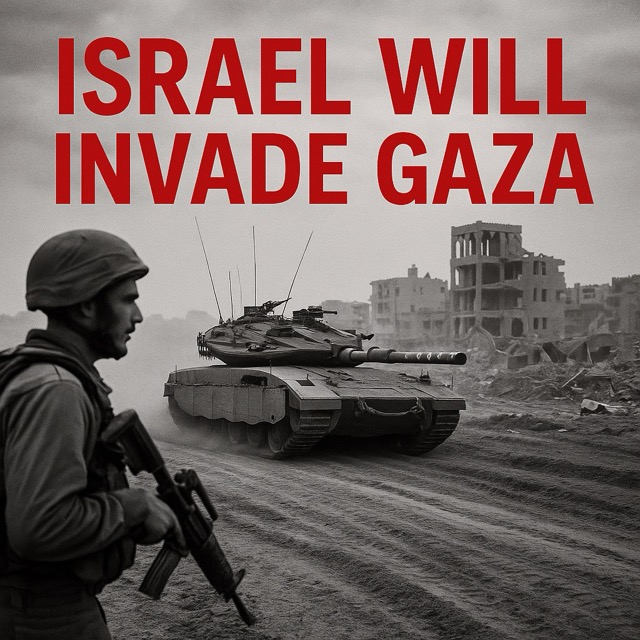
As the conflict between Israel and Hamas continues to escalate, the question of a full-scale Israeli invasion of Gaza looms large on the international stage. With increasing rocket attacks on southern Israeli towns and the continued militarization of the Gaza Strip, military analysts and political leaders alike are debating not just the likelihood of such an invasion, but also its potential outcomes and long-term consequences.
An Israeli ground invasion would be a significant military operation, drawing on lessons learned from past incursions in 2008-09, 2014, and 2021. Unlike previous operations, however, the current political climate suggests that this time the objective may not only be to degrade Hamas’ capabilities, but to eliminate them entirely and establish a new governing structure for Gaza.
Winning the war, in this context, would not merely be defined by battlefield success, but by the removal of Hamas as a military and political force. To achieve this, Israel would likely deploy its most elite units and use precise intelligence to neutralize Hamas leadership and infrastructure. Such an operation would come with a high cost—both in terms of lives and regional stability—but could set the stage for a fundamentally different future for Gaza.
The question of what comes next is as crucial as the military strategy itself. If Hamas is removed from power, who will govern Gaza? Israel may work with regional Arab allies and international bodies to establish a transitional administration, potentially under UN supervision. This transitional body would be responsible not just for basic governance but for rebuilding vital infrastructure, schools, hospitals, and housing destroyed during the conflict.
Reconstruction will be a monumental task. Gaza has suffered from years of blockade, poor governance, and intermittent wars. Any lasting peace will require not only massive financial investment but also a strategic plan for economic and social development. International donors—including the EU, Gulf states, and the U.S.—will likely be asked to contribute to a Marshall Plan-style recovery.
Israel’s role in this reconstruction effort will be critical to changing the narrative. If the international community sees Israel not only as a military actor but also as a partner in rebuilding and stabilizing Gaza, it could alter regional dynamics and lead to broader normalization with Arab states.
Ultimately, the road ahead is fraught with danger and uncertainty. But if Israel can achieve a decisive military victory, followed by a just and sustainable reconstruction of Gaza, it could transform one of the most volatile regions in the world into a model of post-conflict recovery.