Investigating How Neo-Fascist Movements Thrive in Italy Under Political and Legal Blind Spots
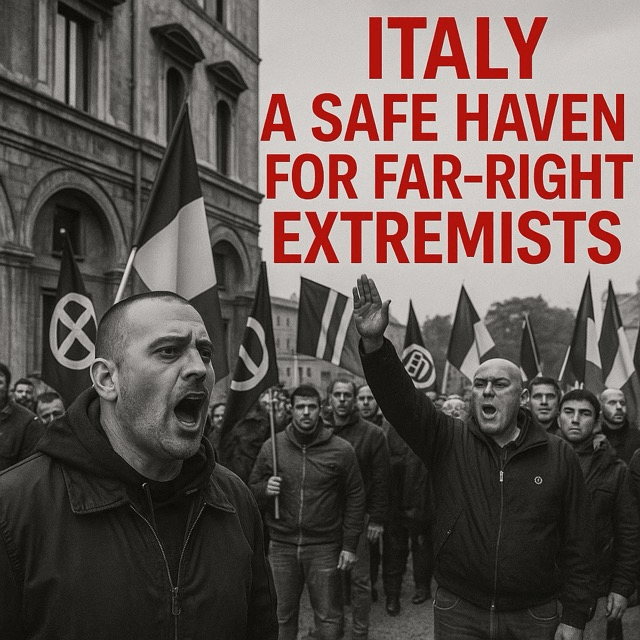
In recent years, Italy has emerged as an unexpected sanctuary for far-right extremists across Europe. Despite its historical association with anti-fascist resistance, today’s Italy finds itself grappling with the rise and normalization of neo-fascist ideologies. Experts argue that Italy’s legal system, political tolerance, and cultural environment have inadvertently turned the country into a haven for black-shirt movements and ultranationalist groups.
Dozens of far-right organizations, including openly fascist and neo-Nazi entities, operate with relative impunity. Groups like CasaPound and Forza Nuova have offices, publish propaganda, and organize rallies across major cities such as Rome, Milan, and Verona. These organizations exploit loopholes in Italian laws that do not explicitly criminalize fascist symbolism or rhetoric unless it incites violence. As a result, they are able to frame their actions as cultural or political expression.
One of the more troubling aspects is the quiet tolerance extended by elements within Italy’s political and law enforcement institutions. Several members of Parliament have been accused of downplaying fascist history or even engaging with far-right groups. Law enforcement responses to extremist activity are often criticized as lax, especially when compared to how left-wing protests are policed.
Moreover, Italy has become a meeting ground for transnational far-right collaboration. Extremists from France, Germany, Hungary, and even the United States have visited Italy to attend conferences and training events, further cementing its role as a strategic node in Europe’s far-right network. Investigations have uncovered connections between Italian extremists and foreign paramilitary groups, as well as the sharing of propaganda strategies and encrypted communications technologies.
Digital platforms play a key role in facilitating these movements. Italian extremist influencers use Telegram channels, podcasts, and fringe social networks to spread conspiracy theories, Holocaust denial, and anti-migrant rhetoric. Despite repeated reports from watchdog organizations, authorities have been slow to regulate or shut down these channels.
The consequences of Italy’s permissiveness are tangible. Hate crimes against immigrants and minorities have seen a measurable increase, with several attacks traced back to individuals affiliated with far-right circles. At the same time, cultural acceptance of nationalist and authoritarian sentiments appears to be growing, especially among younger Italians who feel disillusioned by mainstream politics.
Civil society groups and parts of the academic community have issued repeated warnings, urging the government to take stronger action. They call for the enforcement of existing anti-fascist laws, improved intelligence sharing on extremist threats, and public education campaigns to counter radicalization. However, progress has been slow and often blocked by political resistance or lack of consensus.
In conclusion, while much of Europe intensifies efforts to curb the resurgence of far-right extremism, Italy remains a glaring exception. Its combination of legal ambiguity, political tolerance, and historical amnesia has made it a fertile ground for extremists seeking a safe operating base. Without decisive action, Italy risks becoming not only a national concern but a European security vulnerability.



 The Tower Post