The Food Giant Signals Strategic Adjustments as Global Trade, Regulation, and Consumer Behavior Evolve
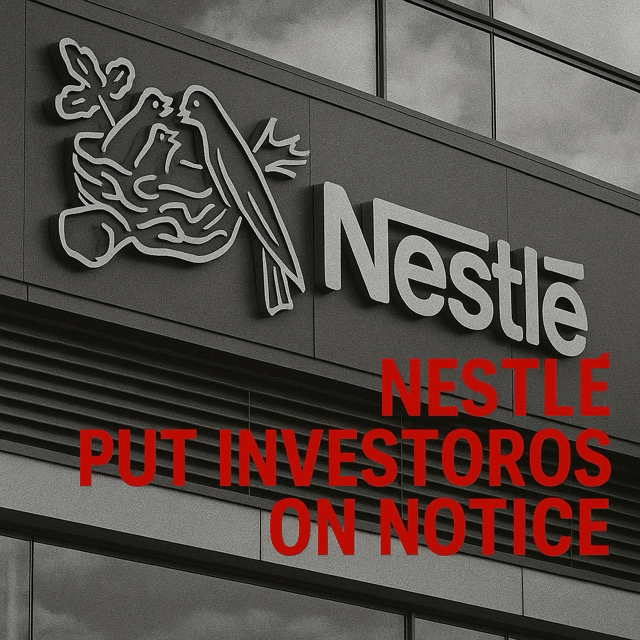
In a recent investor briefing, global food and beverage giant Nestlé issued a sobering message: the business environment has fundamentally changed since the Trump administration, and long-term strategy must adapt accordingly. Executives highlighted significant shifts in trade policy, supply chain dynamics, regulatory pressure, and consumer expectations that now require a more agile and resilient approach to growth.
During the Trump years, Nestlé benefited from a deregulation-first approach in the United States, favorable corporate tax policies, and relatively stable commodity pricing. Cross-border trade was more predictable, and business expansion in the U.S. was encouraged by relaxed FDA scrutiny and pro-business rhetoric. However, the landscape today is vastly different.
Rising geopolitical tensions, climate-linked supply chain disruptions, and shifting consumer demand have altered Nestlé’s global footprint. Executives noted increased difficulty navigating tariffs and export controls, especially in emerging markets. Political instability in key sourcing regions, coupled with inflationary pressure, has forced the company to rethink procurement, production, and distribution strategies.
Regulatory scrutiny has also intensified. From stricter food labeling requirements in Europe to growing litigation risks in the United States over sugar content and health claims, Nestlé faces a more complex legal environment. In the U.S., Democratic-led initiatives have brought back stricter environmental and nutritional regulations, reversing many of the deregulatory trends of the previous administration.
Investors were warned that top-line growth may fluctuate more heavily in the coming quarters, especially in North America and Latin America, where political uncertainty and macroeconomic instability continue to weigh on performance. At the same time, executives emphasized a commitment to long-term innovation and sustainability, including plant-based product lines, recyclable packaging, and energy-efficient operations.
Another point of concern is the labor market. Nestlé is struggling with rising wages, increased union activity, and workforce shortages across several regions. Remote work adaptations, once considered temporary, are being reexamined as part of a permanent hybrid structure, requiring both new technologies and cultural shifts.
Despite these challenges, Nestlé executives sought to reassure stakeholders. The company maintains a robust balance sheet and is investing in digital transformation, AI-driven logistics, and new market segments like personalized nutrition. “We are entering a new era of consumer capitalism,” one executive noted, “and agility will be the deciding factor.”
In conclusion, Nestlé’s candid acknowledgment of the post-Trump shift in global business conditions signals a broader trend among multinational corporations. With increased volatility and a new set of operational realities, businesses must prepare for a future defined not by static expansion, but by dynamic adaptation and strategic reinvention.




 The Tower Post