Swiss Banking Giant Admits Role in Helping Americans Hide Over $4 Billion from IRS Authorities
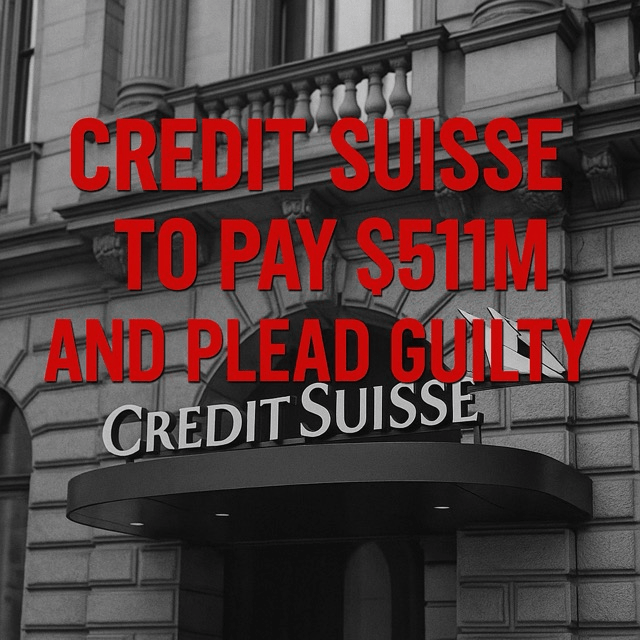
In a landmark legal settlement, Credit Suisse has agreed to pay $511 million and plead guilty to charges that it helped American clients hide more than $4 billion from U.S. tax authorities. The case, which dates back more than a decade, marks one of the most significant enforcement actions in the ongoing global crackdown on tax evasion and banking secrecy.
The agreement, announced jointly by the U.S. Department of Justice (DOJ) and the Internal Revenue Service (IRS), exposes the depth of Credit Suisse’s efforts to shield wealthy Americans from their tax obligations. Prosecutors allege that bank employees actively assisted clients in concealing assets through undeclared accounts, shell companies, and other illicit structures, while misleading U.S. regulators.
This is not the first time Credit Suisse has faced scrutiny for its offshore banking practices. In 2014, the bank paid $2.6 billion in a separate tax case and pledged to reform its compliance protocols. However, investigators found that Credit Suisse continued to serve high-net-worth U.S. clients in secret—even after publicly promising to cease such conduct.
According to court documents, the newly discovered violations include over 25 previously undisclosed accounts worth more than $20 million each, maintained well after the 2014 settlement. Several of the accounts were allegedly hidden with the help of bankers who used encrypted communications and falsified documentation.
Credit Suisse’s guilty plea includes an admission of wrongdoing, an agreement to cooperate with ongoing investigations, and the implementation of enhanced compliance measures. The $511 million fine will be divided among the DOJ, the IRS, and the State of New York, reflecting the multi-jurisdictional nature of the probe.
The case has reignited debates around the effectiveness of financial oversight and the lingering appeal of Swiss banking secrecy, despite years of regulatory pressure and international agreements like the Foreign Account Tax Compliance Act (FATCA). U.S. officials have framed the settlement as a clear warning to financial institutions that continue to prioritize secrecy over legality.
Acting Assistant Attorney General Nicole Argentieri said, “This case sends an unmistakable message: institutions that help U.S. taxpayers evade taxes will be held fully accountable, no matter how powerful or well-connected.”
Credit Suisse, now a subsidiary of UBS after a government-engineered takeover in 2023, has issued a formal apology and emphasized its commitment to compliance going forward. UBS has pledged full cooperation with authorities and said it is “moving swiftly to address all legacy issues inherited from Credit Suisse.”
In conclusion, the $511 million settlement and guilty plea represent more than a financial penalty—they mark a critical moment in the global fight against offshore tax evasion. As regulators continue to close the gaps exploited by financial elites, this case stands as a potent reminder of the consequences for banks that put profit ahead of the law.




 The Tower Post