Medical Negligence, Legal Responsibility, and the Quest for Justice in the Case of a Global Icon
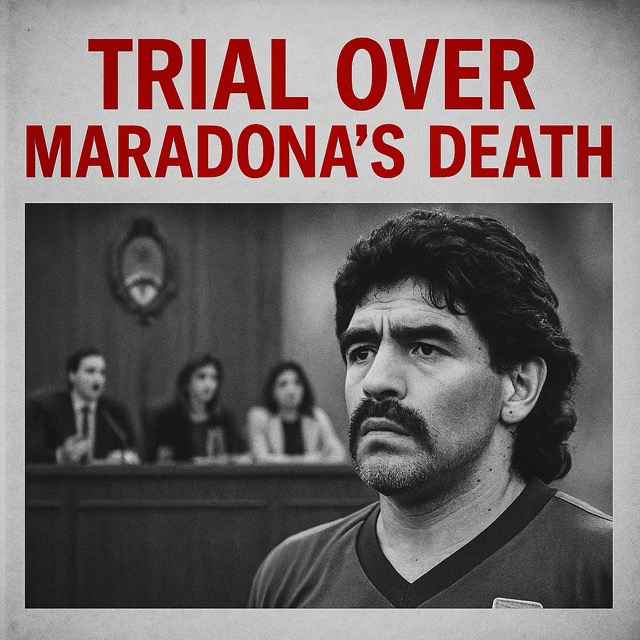
The long-anticipated trial over the death of Diego Armando Maradona, one of football’s most legendary figures, has officially begun in Buenos Aires. The case, centered on allegations of medical negligence, has reignited intense debate over the circumstances surrounding the Argentine star’s final days and the responsibilities of those tasked with his care.
Maradona passed away on November 25, 2020, at the age of 60, due to cardiac arrest in his home outside the capital, just weeks after undergoing brain surgery for a subdural hematoma. His death, initially seen as a tragic yet natural end for a man whose health had long been in decline, soon became the subject of a high-profile investigation.
Eight medical professionals, including Maradona’s neurosurgeon, psychiatrist, psychologist, nurses, and a medical coordinator, are now standing trial. Prosecutors allege that the care team acted with “recklessness” and “abandonment,” allowing Maradona’s condition to deteriorate without proper intervention. If convicted, they could face prison sentences of up to 25 years.
Key to the prosecution’s case is a damning panel report commissioned by Argentina’s medical board, which concluded that Maradona’s medical team had failed to provide basic care, and that the World Cup winner had been “left to his fate.” The report claims that he was not adequately monitored, his vital signs were not properly tracked, and his home care environment was entirely inappropriate for a post-operative patient with a history of substance abuse and chronic conditions.
Defense lawyers argue that Maradona’s deteriorating health and complex medical history—including heart disease, liver complications, and addiction—made his death difficult to prevent. They also point out that he himself resisted hospitalization and clinical treatment, preferring to stay in the comfort of his private residence.
Public opinion in Argentina remains fiercely divided. Maradona, who rose from the slums of Villa Fiorito to become a global football icon, remains a beloved but controversial figure. To many, his death symbolizes institutional failure and the dangers of fame. To others, it is a tragic reminder of the consequences of personal excess.
The trial has brought emotional testimony from Maradona’s daughters, ex-partners, and former teammates, who have all called for accountability. Meanwhile, outside the courtroom, fans hold vigils and carry banners declaring, “Justice for Diego.”
Regardless of the verdict, the trial marks an important chapter in Argentina’s reckoning with the legacy of its most revered sports figure. It is not just about guilt or innocence—it is about how a nation honors, protects, and ultimately fails its heroes.
In conclusion, as the world watches the courtroom proceedings unfold, the trial over Diego Maradona’s death serves as both a legal battle and a cultural moment. It forces difficult questions about medical ethics, celebrity treatment, and the fragile line between myth and mortality.




 The Tower Post